Three training splits dominate strength programming, and each one produces real results under the right conditions. The question isn't which split is best in theory. It's which one fits your schedule, experience level, and weekly volume target. Full body vs upper/lower vs push-pull-legs each has a clear use case, and the wrong choice usually comes down to a mismatch between split and lifestyle.
At a glance: Full body works best at 2 to 3 days. Upper/lower fits 4 days well. Push-pull-legs runs on 5 to 6 days. All three can build muscle when volume is consistent.
The Three Splits at a Glance
|
Full Body |
Upper/Lower |
Push-Pull-Legs |
|
|
Training days/week |
2 to 3 |
4 |
5 to 6 |
|
Muscle group frequency |
2 to 3x/week |
2x/week |
2x/week (on 6-day) |
|
Session length |
45 to 75 min |
45 to 60 min |
45 to 60 min |
|
Best for |
Beginners, busy schedules |
Intermediate lifters |
Intermediate to advanced |
|
Weakest point |
Lower per-session volume |
Scheduling rigidity |
Requires 5 to 6 free days |
What Is a Full Body Split?
A full body split trains every major muscle group in each session. Typically done 2 to 3 days per week with at least one rest day between sessions.
Pros
- High muscle group frequency (2 to 3 hits per week)
- Flexible: missing one session doesn't derail the week
- Time-efficient for people with 3 or fewer training days
- Ideal for building movement patterns early in training
Cons
- Limited volume per muscle group per session
- Fatigue accumulates across the body by the end of each workout
- Harder to add volume as you advance without sessions becoming very long
Who It's For
Beginners and anyone training 2 to 3 days per week. Also works well for intermediate lifters maintaining fitness during a busy period.
What Is an Upper/Lower Split?
An upper/lower split divides training into upper body days and lower body days, typically alternating across 4 sessions per week.
Pros
- Good balance of frequency and volume per muscle group
- Clear structure: upper days and lower days don't overlap
- Allows more sets per muscle group than full body without excessive session length
- Flexible enough to shift days without losing the structure
Cons
- 4 days per week is the minimum to run it properly
- Upper days can run long if too many exercises are added
- Less flexibility than full body for people with unpredictable schedules
Who It's For
Intermediate lifters who have 4 consistent days per week. The most common recommendation for people moving past beginner programming.
What Is a Push-Pull-Legs Split?
Push-pull-legs (PPL) groups muscles by movement pattern. Push days cover chest, shoulders, and triceps. Pull days cover back and biceps. Leg days cover quads, hamstrings, glutes, and calves.
Pros
- High volume per muscle group per session
- Clear movement pattern logic: muscles that work together train together
- On a 6-day schedule, each muscle group gets trained twice per week
- Suits lifters who want dedicated sessions for each movement pattern
Cons
- Requires 5 to 6 training days per week to be effective
- On a 3-day schedule, each muscle only gets hit once per week
- Not beginner-friendly: sessions require knowing a wide range of exercises
Who It's For
Intermediate to advanced lifters with 5 to 6 available training days. At 3 days, a full body split outperforms PPL on frequency.
Head-to-Head: Volume, Frequency, and Recovery
What drives muscle growth is total weekly sets per muscle group, not how many days those sets are spread across. In practice though, session quality drops when too much volume is packed into a single workout. That's the real reason frequency matters for most people.
What that means in practice:
|
Full Body (3 days) |
Upper/Lower (4 days) |
PPL (6 days) |
|
|
Weekly sets per muscle (typical) |
9 to 15 |
12 to 18 |
14 to 20 |
|
Recovery between same-muscle sessions |
48h+ |
48h+ |
48h+ (on 6-day) |
|
Risk of junk volume |
Low |
Medium |
Higher without programming care |
All three splits can hit the 10 to 20 sets per muscle group per week target. The split determines how you distribute those sets, not whether you hit them. ACSM also emphasizes that progression, training variables, and recovery management shape resistance training outcomes in its resistance training position stand.
Which Split Should You Choose?
Use this decision logic:
If you have 2 to 3 days per week: Full body. No other split matches the frequency and flexibility at this training volume.
If you have 4 days per week: Upper/lower. It was designed for this schedule. PPL at 4 days means one muscle pattern gets hit once instead of twice.
If you have 5 to 6 days per week and at least 1 year of consistent training: PPL. The volume capacity and movement pattern focus pays off at this level.
If you're a beginner regardless of available days: Start with full body at 3 days. Build movement patterns before adding split complexity.
If you've been training 6 to 12 months consistently: Upper/lower at 4 days is the natural next step.

One More Variable: Schedule Consistency
The best split is the one you can run for 8 to 12 weeks without missing sessions. A 6-day PPL program with unpredictable work hours produces worse results than a 3-day full body program done consistently.
Ready-to-Use Weekly Schedules
Full Body: 3 Days Per Week
|
Day |
Session |
|
Monday |
Full body (squat pattern, push, pull, hinge) |
|
Wednesday |
Full body (variation: lunge, incline push, row, deadlift) |
|
Friday |
Full body (squat, overhead press, pull-up/lat pull, Romanian deadlift) |
|
Tue / Thu / Sat / Sun |
Keep compound movements as the foundation. Rotate exercise variation across sessions to hit different angles.
Upper/Lower: 4 Days Per Week
|
Day |
Session |
|
Monday |
Upper (push focus: chest, shoulders, triceps) |
|
Tuesday |
Lower (quad focus: squat, leg press, lunge) |
|
Thursday |
Upper (pull focus: back, biceps) |
|
Friday |
Lower (posterior chain focus: deadlift, hamstring curl, glute work) |
|
Wed / Sat / Sun |
Rest or active recovery |
Alternating the focus within upper days and lower days ensures each muscle gets adequate volume across the week.
Push-Pull-Legs: 6 Days Per Week
|
Day |
Session |
|
Monday |
Push (chest, shoulders, triceps) |
|
Tuesday |
Pull (back, biceps) |
|
Wednesday |
Legs (quads, hamstrings, glutes, calves) |
|
Thursday |
Push (variation) |
|
Friday |
Pull (variation) |
|
Saturday |
Legs (variation) |
|
Sunday |
Rest |
On a 6-day PPL, each muscle group gets trained twice per week. Vary exercise selection between the first and second session of each pattern to manage fatigue and hit different muscle angles.
Can You Run These Splits at Home?
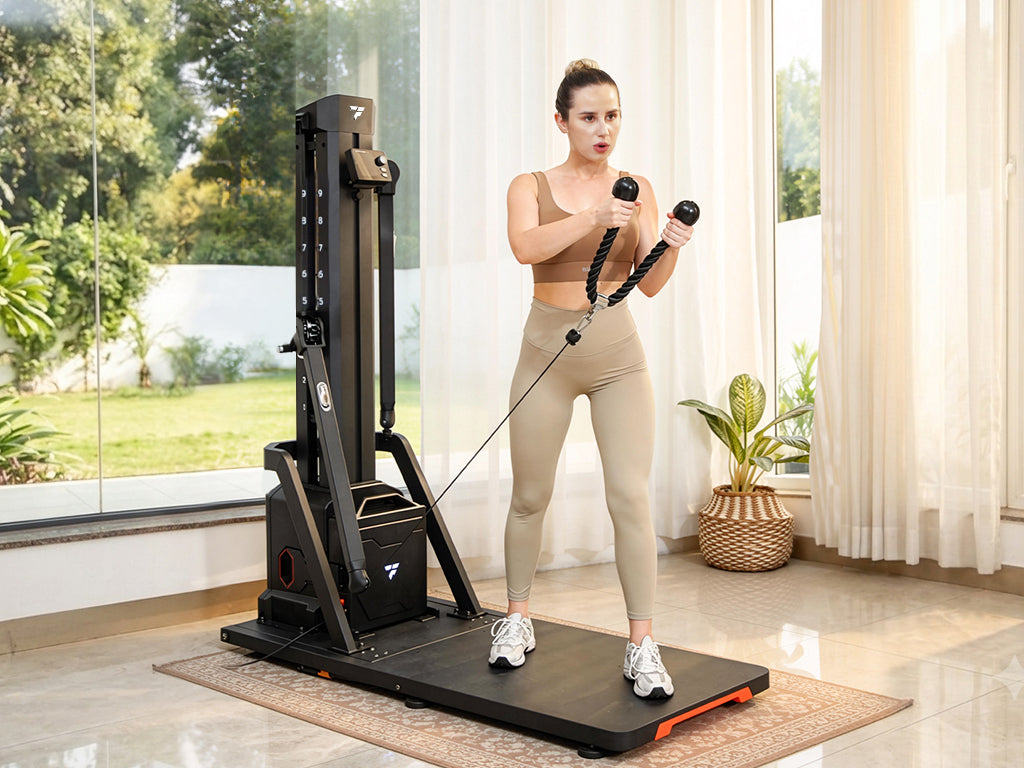
Yes, with the right equipment. The limiting factor for home training is usually pull and cable variation, specifically lat pull-downs, cable rows, tricep push-downs, and face pulls. These movements require a cable system to replicate gym-level loading.
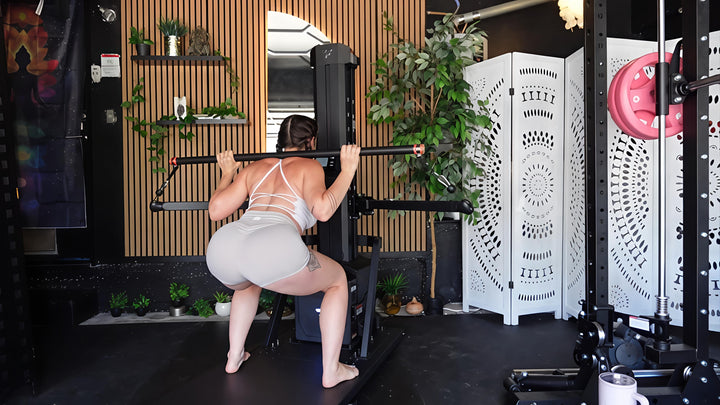
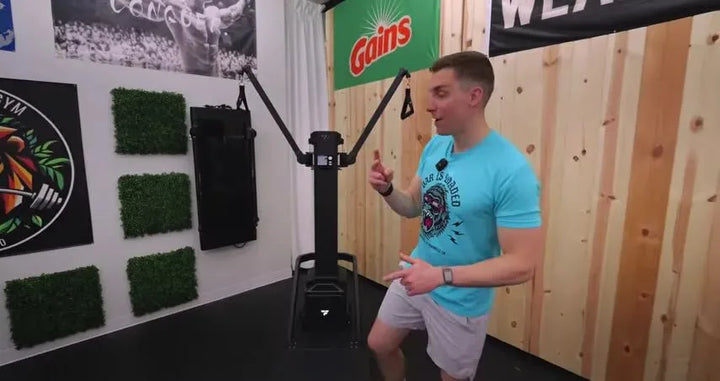
The FitTransformer Titan handles all three splits without adding equipment as frequency increases. The cable system supports 264 lbs of resistance and adjustable pulley height, covering every push, pull, and leg movement needed for full body, upper/lower, or PPL programming. For cardio days or active recovery, one-click ski mode switches the machine to a full-body aerobic workout.
Switching from a 3-day full body plan to a 6-day PPL doesn't require buying new machines. The same setup handles both.
Common Mistakes When Choosing a Split
- Switching splits every 2 to 3 weeks. No split produces results in under 6 weeks. Consistency across 8 to 12 weeks is what drives adaptation.
- Running PPL on 3 days. Each muscle only gets hit once per week. At that point, full body gives better frequency for the same time investment.
- Adding too many exercises per session. More exercises per session doesn't mean more muscle growth if total sets exceed recovery capacity. Hitting 3 to 5 distinct movements per muscle group spread across the week is usually enough to accumulate your target sets.
- Skipping legs consistently. Leg sessions are the hardest. They're also the ones most commonly skipped. Lower body training builds structural balance and systemic strength, and skipping it long-term creates asymmetry and stalls progress on compound lifts like bench press and overhead press that depend on a stable base.
- Choosing a split based on what looks impressive, not what fits your schedule. A 6-day PPL plan that gets run 3 days a week is worse than a 3-day full body plan done consistently.
FAQs
Q1: What is the best workout split for beginners?
Full body, 3 days per week. Beginners build muscle fastest when each movement pattern is practiced frequently, and full body training at 3 days hits every muscle group 3 times per week while keeping session complexity manageable.
Q2: Is a 4-day split better than 3 days a week?
Not automatically. Four days allows more total weekly volume, but only if recovery supports it. For most intermediate lifters, 4 days with an upper/lower split outperforms 3-day full body on volume capacity. For beginners, 3 days is sufficient.
Q3: Can you mix full body and push-pull-legs in the same week?
Yes, but it requires planning. A hybrid week might run full body on Monday, PPL push on Wednesday, and PPL pull on Friday. The key is tracking total sets per muscle to stay within your recovery range. Ad hoc mixing without volume tracking usually leads to overtraining some muscles and undertraining others.
Q4: How long should each workout session be?
45 to 75 minutes covers the effective range for most people. Full body sessions can run up to 75 minutes to cover all muscle groups. Upper/lower and PPL sessions typically run 45 to 60 minutes since each session focuses on fewer muscle groups with higher volume per group.
Q5: Can you do push-pull-legs with a home gym cable machine?
Yes. PPL relies heavily on cable movements for pull days (lat pull-downs, cable rows, face pulls) and push days (cable flyes, tricep push-downs). A cable machine with adjustable pulley height covers all of them. The FitTransformer Titan's cable system handles up to 264 lbs and adjusts pulley position, making it capable of running a full PPL program at home without equipment gaps.
Build Your Split, Start This Week
The split you run for 8 weeks beats the perfect split you keep researching. Full body gets you started. Upper/lower scales with you. PPL handles high volume when you're ready. Pick the one that fits your schedule right now and run it consistently. FitTransformer is built to support all three, from a 2-day full body session to a 6-day PPL program, all from one machine at home.