Most people set up a home gym with one type of equipment and wonder why their results plateau. Cardio machines build endurance but not muscle. Weights build muscle but not cardiovascular fitness. Getting both right at home takes a clear plan: training structure, equipment, and space. Here is what you need.
Do You Need Both Cardio and Strength Training?
Yes, and neither fully replaces the other.
Cardio improves how efficiently your heart and lungs deliver oxygen. Strength training builds the muscle that raises your resting metabolic rate and keeps your joints stable. Combining both produces better outcomes for body composition, cardiovascular risk, and overall fitness than either approach alone.
Research confirms that combined aerobic and heavy resistance training produces superior improvements in body composition and muscle hypertrophy compared to either modality in isolation.

The practical minimum: 150 minutes of moderate cardio per week and at least two full-body strength sessions. Roughly five sessions a week, with some overlap possible.
If your goal is fat loss, muscle gain, or long-term health, both belong in your plan.
How Do You Do Cardio at Home?
You do not need a machine. The most effective options:
Walking or Running
Free, no equipment needed. High-impact on joints at higher frequencies, and weather-dependent outdoors.
Cycling
Low-impact, easy to control intensity, good for steady-state aerobic work. Primarily a lower-body activity.
Rowing
Full-body with low joint impact. Engages legs, back, and arms in one stroke. Works for both steady-state and high-intensity intervals. The Sail rowing machine combines air, water, and magnetic resistance in a single unit for precise intensity control across all training zones.
Ski Erg
Upper-body dominant cardio. Pulls through the core, arms, and back. Pairs well with leg-heavy strength days.
Jump Rope
Inexpensive, small footprint, effective for conditioning. Higher skill floor than the other options.
How Do You Do Strength Training at Home?
Progressive overload, adding resistance over time, is what drives results. Choose equipment that gives you room to increase the challenge.
Dumbbells
Versatile and familiar. Cost and space grow as the weights accumulate.
Resistance Bands
Inexpensive and compact. Tension is hard to measure precisely, and the resistance ceiling is low for experienced lifters.
Barbell and Rack
Resistance training with a barbell and rack offers a high resistance ceiling and is effective for compound movements, but requires substantial space and ideally a spotter or safety setup.
Cable System
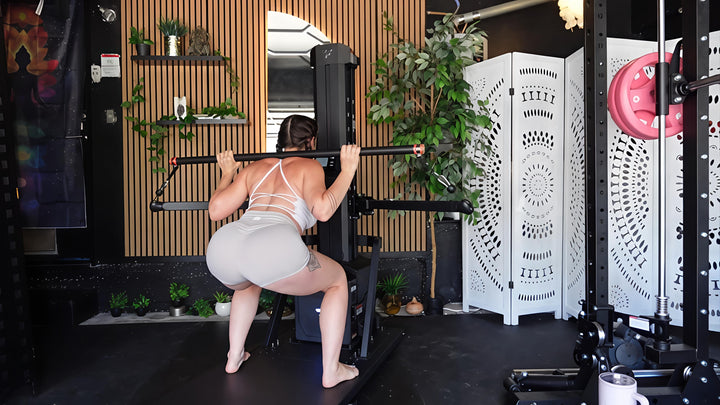
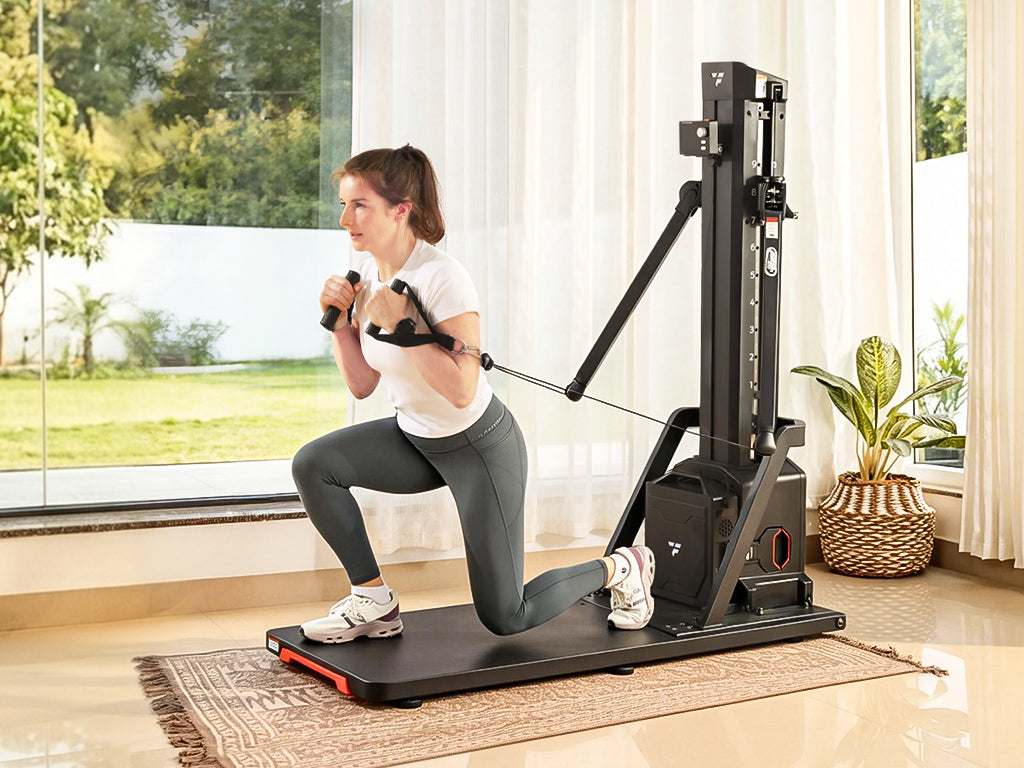
Adjustable resistance with consistent tension throughout the range of motion. The cable system supports pulling, pushing, hinge, and rotation movements from multiple angles. Covers more training patterns per square foot than most other options.
Should You Do Cardio or Weights First?
It depends on your primary goal. For a full breakdown of sequencing strategies, the cardio before or after weights guide covers every scenario in detail.
- Building strength or muscle: weights first. Strength training requires neuromuscular focus that cardio fatigue reduces.
- Improving endurance: cardio first, while energy is highest for sustained aerobic effort.
- Fat loss or general fitness: order matters less than consistency. Weights first is a reasonable default.
If both are on the same day, separate them by a few hours when possible. A morning strength session and an evening walk is more effective than doing both back to back.
What Mistakes Do People Make With Home Gym Training?
Doing only cardio, or too much of it.
Cardio without strength training causes you to lose muscle over time, which lowers your metabolic rate even as endurance improves.
Training at high intensity every day without recovery.
Adaptation happens during rest, not during the session. Consecutive hard days without recovery stalls progress and raises injury risk.
Training on poor sleep.
Sleep deprivation reduces strength output, slows muscle repair, and raises cortisol. Both fat loss and muscle gain take a hit.
Not getting enough water or protein.
Dehydration hurts performance even at mild levels, and without enough protein, the muscle stimulus from strength training goes to waste.
Ignoring movement quality.
Knees caving on squats, shoulders creeping up during rows, and a rounded lower back under load are the patterns that quietly build into joint pain.
Going heavy before your form is solid.
Loading up too soon is one of the fastest ways to get hurt and knock yourself out of a training routine entirely.

What Home Gym Equipment Do You Need?
Equipment by training goal:
Fat loss
- Cardio: rowing machine or stationary bike (sustainable for 30–60 min sessions)
- Strength: cable system or adjustable dumbbells (progressive overload)
Muscle gain
- Cardio: any low-impact option on off days (rowing, cycling, ski erg)
- Strength: cable system or barbell rack with adjustable bench
General fitness and longevity
- Cardio: brisk walking, cycling, or rowing
- Strength: adjustable dumbbells or cable system
Limited space
- A single multi-function machine covering both modes (see H2 below)
Three things to check before buying:
- Resistance range. How light and how heavy does it go?
- Footprint vs. storage size. Check both in-use and stored dimensions.
- Subscription requirements. Confirm which features work without a monthly fee.
How Much Space Does a Home Gym Need?
A functional combined setup fits in less space than most people expect. The home gym space guide covers exact measurements for every setup type.
- ~50 sq ft (minimum): A single multi-function machine, or a compact cable system paired with a foldable cardio option. Works for a bedroom corner or small spare room.
- 80–120 sq ft (comfortable): Dedicated cardio equipment and a strength station with clearance to move safely around both.
- 150+ sq ft (full setup): Separate stations, accessory storage, and space for floor work.
Ceiling height matters for overhead pressing and ski erg training. Confirm at least 8 ft of clearance. A rubber mat under equipment protects hard floors and reduces noise transfer.
Can One Machine Replace a Full Home Gym?
For many home setups, yes, if it genuinely covers both modes.
The problem with most equipment:
|
Type |
Cardio |
Strength |
|
Treadmill / bike |
Yes |
No |
|
Barbell rack / cable machine |
No |
Yes |
|
Multi-function machine |
Depends |
Depends |
Most "multi-function" machines combine strength with one limited cardio mode, or lock features behind a subscription.
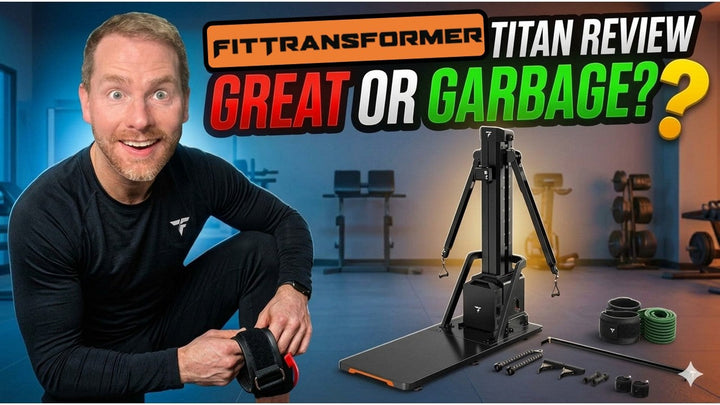
FitTransformer Titan:
- Strength mode: cable system with 264 lbs resistance, 150+ exercises across pulling, pushing, hinge, and rotation patterns
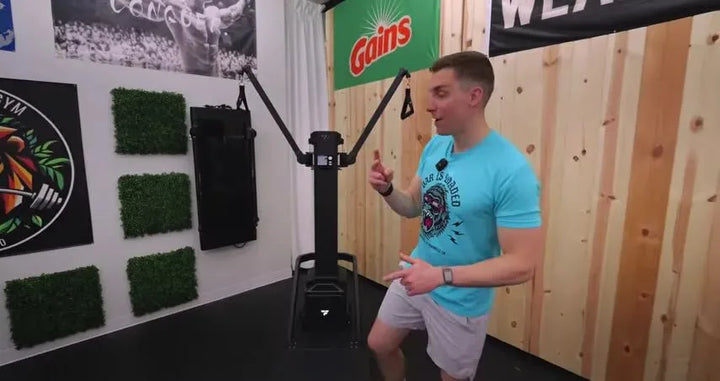
- Cardio mode: ski erg with one-click switch, no tools required
- Footprint: folds to 60% of in-use size for storage
- No wall mounting required
- No subscription fees
For a home setup where space is limited and training goals cover both cardio and strength, the Titan removes the need for two separate machines.
Start With the Right Setup
Build your training around both cardio and strength from the start. Decide on order based on your primary goal. Choose equipment that allows progression. Measure your space before buying.
For both cardio and strength in one footprint, the FitTransformer Titan covers the full range. No subscription, no wall mounting, folds for storage.
FAQs
Q1: Can I build muscle and lose fat at the same time?
Yes, particularly in the early months of training. The process is called body recomposition. It works best with sufficient protein, consistent strength training, and moderate cardio. As little as 8 weeks of combined training may provide more comprehensive cardiovascular and body composition benefits compared to either modality alone. Progress is slower than focusing on one goal, but both can improve simultaneously.
Q2: Can I do cardio and strength training on the same day?
Yes. Separate them by a few hours when possible. If training back to back, do strength first to preserve the quality of the heavier work. Avoid long, intense cardio immediately before a strength session.
Q3: Do I need a subscription to use a home gym machine?
Not always. Many machines, including cable systems and rowing ergometers, work fully without a subscription. Some smart machines lock basic tracking behind monthly fees. Before buying, confirm which features work without a subscription. The FitTransformer Titan includes full functionality with no ongoing fees.
Q4: How do I know if I am doing enough cardio alongside strength training?
Target 150 minutes of moderate cardio per week, split across three or four sessions. Signs you need more: slow recovery between strength sessions, elevated resting heart rate, or daily fatigue. Signs you are overdoing it: declining strength, disrupted sleep, or consistently low motivation to train.
Q5: What should I buy first, cardio or strength equipment?
Strength equipment first. Muscle raises resting metabolism and supports fat loss even on rest days. Cardio requires no equipment to start: walking, running, and jump rope are all effective while you save for a dedicated machine.