Training your abs at home and not seeing results usually comes down to one thing: most routines only train the front of your core and skip the rest. A complete ab workout covers four different jobs your core does.
This guide gives you the full picture, a no-equipment routine to start today, and a clear path to keep progressing.

Quick Reference: Core Training at a Glance
|
Core Zone |
What It Does |
Key Exercise |
|
Front abs |
Curls your torso forward |
Reverse Crunch |
|
Deep core |
Stops your spine from twisting |
Dead Bug |
|
Full stability |
Holds your trunk solid under load |
Shoulder Tap Plank |
|
Side abs (obliques) |
Rotates and side-bends your torso |
Bicycle Crunch |
Is "Ab Workout" the Same as "Core Training"?
No. An ab workout usually means crunches and sit-ups, which only train the front of your core. Core training covers four distinct zones:
- Front abs: Pull your ribcage toward your hips. What crunches train. Most people stop here.
- Deep core: Don't move your body. They stop unwanted movement. Most neglected zone.
- Side abs (obliques): Rotate and side-bend your torso. Need twisting movements to develop.
- Full stability: All zones working together. Plank variations live here.
When only the front gets trained, the rest stays weak. That's usually what causes the back discomfort and stalled progress most home trainers experience.
5 Signs Your Core Is Actually Weak
- Can't hold a plank for 30 seconds without your lower back sagging
- Hips and shoulders shift around during push-ups or rows
- Lower back gets achy after sitting for a while
- You feel a heavy lift in your back more than your legs
- Balancing on one leg is harder than it should be
What Does a Strong Core Actually Mean?
Not a six-pack. A strong core means your spine stays protected under load, force moves efficiently through your body during any movement, and your trunk holds steady against pressure from any direction. That's what makes rowing, lifting, and daily movement feel easier. Visible abs are a body fat question, not a core strength question.
What Does a Complete Ab Workout at Home Look Like (No Equipment Needed)?
Harder movements go first when energy is highest. Four blocks, 15 to 18 minutes total. Three times per week, not on back-to-back days.
Warm-Up (2 to 3 Minutes)
Cat-Cow x 10: On hands and knees, slowly arch and round your back. Wakes up the spine before loading it.
Glute Bridge x 15: Lie on your back, feet flat, push hips up and squeeze. Activates the muscles that support your lower back.
Block 1: Reverse Crunch (Front Abs)
Lie on your back, legs raised straight up. Use your lower abs to curl your hips off the floor, pressing your lower back into the ground. Lower slowly.
- Sets/reps: 3 x 10 to 12
- Easier version: Bend knees to 90 degrees
- Key point: Movement is small and slow. If your hips are swinging up, you're using momentum, not your abs.
Block 2: Dead Bug (Deep Core)
Lie on your back, arms pointing up, knees raised and bent at 90 degrees. Press your lower back into the floor. Slowly lower your right arm behind your head while extending your left leg toward the floor. Bring both back, switch sides.
- Sets/reps: 3 x 8 to 10 per side
- Easier version: Move only arms, or only legs, until you can coordinate both
- Key point: The moment your lower back lifts off the floor, stop. That's your limit.
Block 3: Shoulder Tap Plank (Full Stability)
High plank position. Lift one hand, tap the opposite shoulder, return. Alternate. Keep your hips from rocking.
- Sets/reps: 3 x 10 per side
- Easier version: Feet wider than shoulder-width
- Key point: Harder than a static plank because your core has to compensate for one missing support point.
Block 4: Bicycle Crunch (Side Abs)
Lie on your back, hands loosely behind your head. Pull one knee toward your chest and rotate the opposite elbow toward it. Alternate at a controlled pace.
- Sets/reps: 3 x 20 (10 per side)
- Easier version: Keep feet on the floor, just do the rotation
- Key point: Rotation comes from your torso, not from pulling your neck.
How Do Dumbbells and Cable Machines Upgrade Ab Training?
Bodyweight core work has a ceiling. Once you've adapted, doing more reps of the same exercises doesn't keep building strength. Your core responds to progressive overload the same way any other muscle does.
Dumbbell Options
Suitcase Carry: Hold a dumbbell in one hand and walk, keeping your torso upright. Trains your core's ability to resist side-bending under load. No bodyweight equivalent exists for this.
Weighted Hollow Hold: Standard hollow body position with a light dumbbell held overhead. Add small weight increments every two weeks for steady progression.
Cable Core Exercises
A cable machine pulls from the side, not just straight down. That matters because your core's main job isn't bending forward. It's resisting forces that try to pull or twist you off-balance. Cables train exactly that. They also allow 1-pound weight increases, so progress stays consistent over months.
Pallof Press: Stand sideways to the cable, hold the handle at your chest, press straight out and return. The cable constantly pulls you sideways. Your core resists. No bodyweight version exists.
Cable Woodchop (high to low): Cable set high, pull diagonally from shoulder height down to the opposite hip. Rotation comes from the torso, not the arms.
Kneeling Cable Crunch: Kneel facing the cable, rope attachment high, curl your trunk forward against the resistance. Add weight every session. This is how front abs get trained with real progressive overload for core strength.
Standing Cable Rotation: Stand sideways to the cable at waist height, rotate your torso away from the stack while keeping hips forward.
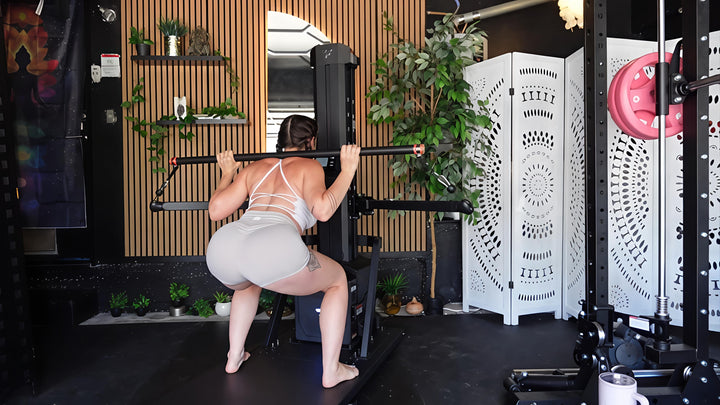
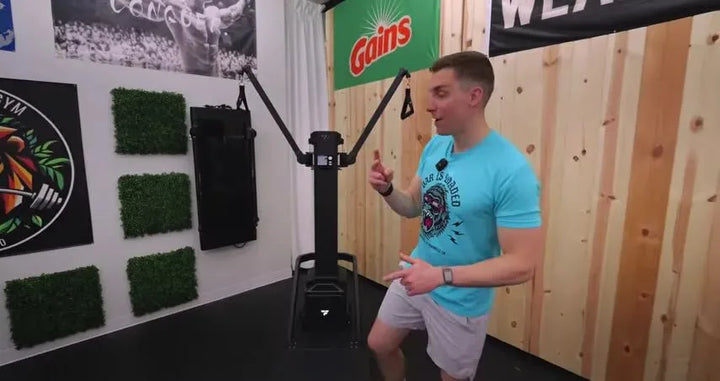
The FitTransformer Titan supports all four movements at home, delivering up to 264 lbs of resistance with 1-pound increments, 150+ exercises, and a folded depth of about 30 inches. No wall mount needed.


How Often Should You Train Abs?
3 to 4 times per week for most people.
Light core work like Dead Bug and planks can be done daily without issue. Hard or weighted sessions need about 48 hours of recovery, same as any strength training.
Frequency by Goal
|
Goal |
How Often |
Session Length |
Focus |
|
Reduce lower back discomfort |
3x per week |
10 to 15 min |
Dead Bug, Pallof Press, planks |
|
Build core muscle |
4x per week |
15 to 20 min |
All four zones, some weighted work |
|
Athletic training (rowing, HYROX) |
5x per week |
10 to 15 min |
Alternate hard and light days |
Training abs every day: Fine for light movements. For hard sessions, daily training slows recovery and stalls progress.
Is 20 minutes enough: Yes, if all four zones are covered at honest effort. Structure matters more than session length.
Why You Might Not Be Seeing Your Abs
Visible abs are a body fat question. The muscle is there. Whether it shows depends on the fat layer above it. Men typically see definition around 10 to 12 percent body fat, women around 15 to 18 percent. That comes from full-body training, cardio, and diet. Ab training builds the muscle. Everything else reveals it.
Ab Training Mistakes to Avoid
- Only training the front abs. Crunches and sit-ups don't develop the deep core or obliques. Use all four zones.
- More reps instead of harder work. Repeating the same thing doesn't drive progress. Increase the challenge over time.
- Holding your breath. Exhale on the effort, inhale on the return. Breath-holding reduces deep core activation.
- Isolating core training from everything else. Rowing, cable work, and carries train the core while the whole body is working, which is how it actually functions.
- Expecting ab training to burn belly fat. It doesn't work that way. Ab training builds muscle. Diet and full-body training reduce the fat on top.

Build a Core That Actually Works. Start Here.
Four zones, four exercises, a clear path from bodyweight to loaded progression. That structure works for beginners and serious athletes alike. When you're ready to add cable training to the mix, FitTransformer brings the full setup home. Visit FitTransformer to see the Titan in action.
FAQs
Q: What is the most effective ab exercise at home?
No single exercise covers all four zones. For the broadest coverage: Reverse Crunch (front abs), Dead Bug (deep core), and Bicycle Crunch (obliques). Those three together train what crunches and sit-ups alone never reach.
Q: How often should you work out your abs?
Three to four times per week for most goals. Light work like planks and Dead Bug can be daily. Weighted or intense sessions need 48 hours of recovery. Mixing light and hard days works better than doing the same intense session every day.
Q: Is 20 minutes of ab training enough?
Yes. Twenty focused minutes covering all four core zones, three times per week, produces more results than longer sessions built around the same few exercises repeated daily.
Q: Why can't I see my abs even though I train them regularly?
Your abs are there. Visibility depends on body fat, not training volume. Lowering body fat requires full-body exercise, cardio, and a caloric deficit. Ab training builds the muscle. Seeing it requires reducing body fat overall.
Q: Do cable machines make ab workouts more effective?
For long-term progress, yes. Once you've adapted to bodyweight work, cable machines let you increase resistance in small increments on exercises like Pallof Press and cable crunches. That consistent overload is what keeps the core developing past the bodyweight plateau.