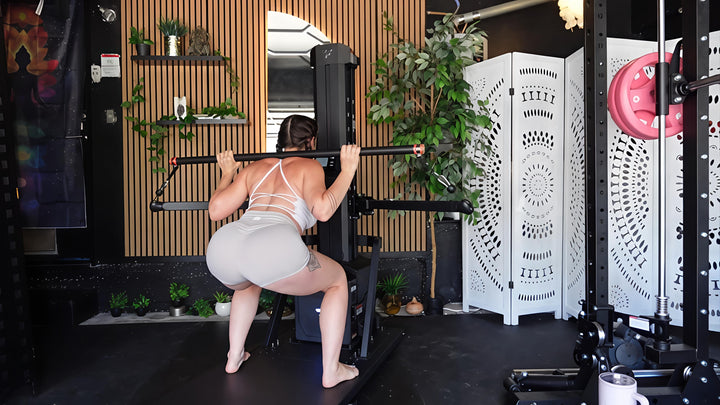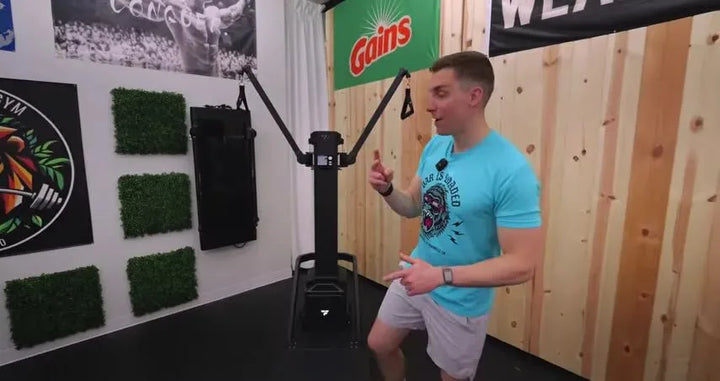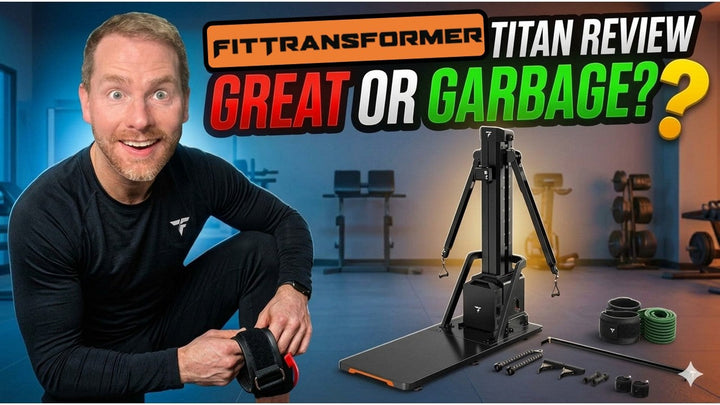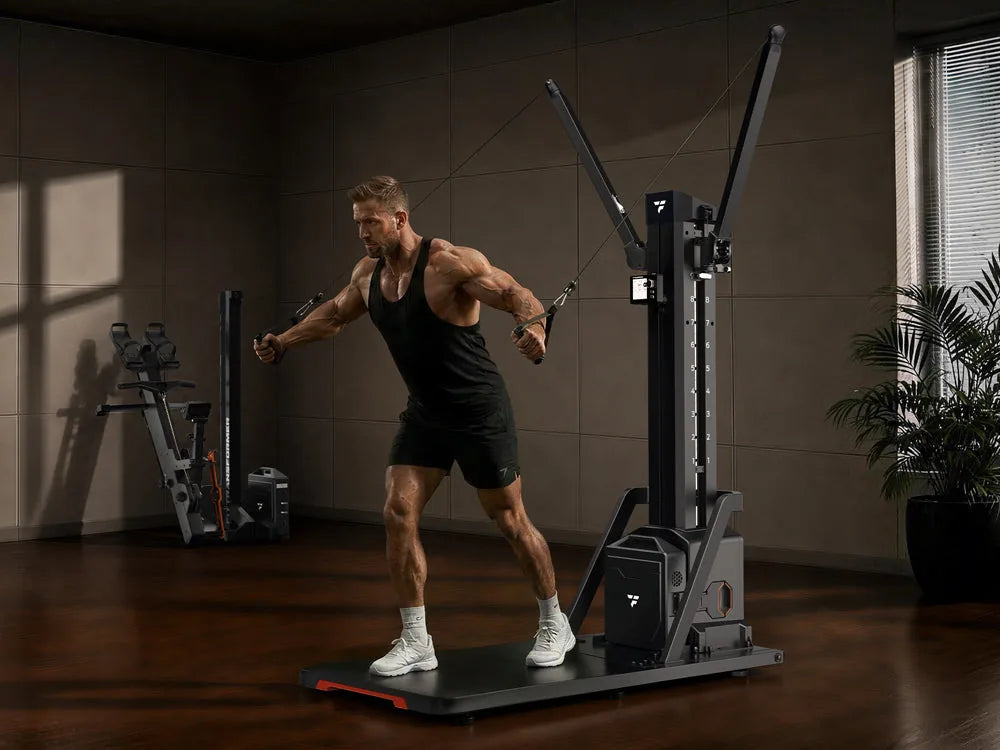
Limited space doesn't mean limited gains. Whether you're working with an apartment corner or a multi-use room, a smart layout can easily support strength, cardio, and mobility training. But before you buy, look past the marketing hype. True space-saving gear isn't just about how small it folds, it’s about balancing your active footprint, safety clearances, and real-world workout variety.
How Much Space Do You Actually Need for a Home Gym?
A basic workout area can start at around 36 square feet, but the right size depends on the equipment, the user's movement range, and the required safety clearances.
A 6 × 6 ft area may be enough for bodyweight exercises, resistance bands, an exercise mat, and adjustable dumbbells. Equipment-based sessions may require more room once doors, furniture, and movement paths are taken into account.
For a more complete setup that combines strength and cardio, 50 to 80 square feet can be a useful planning range. Treat it as a starting point rather than a universal minimum, and compare it with the unfolded dimensions and clearance requirements of each product.
Quick Reference: Space, Equipment, and Training Options
| Space | What May Fit | Potential Training Use |
|---|---|---|
|
36–50 sq ft (6 × 6 ft and above) |
Mat, resistance bands, adjustable dumbbells |
Bodyweight, mobility, and basic strength work |
|
50–80 sq ft |
Above, plus a foldable bench or compact cable machine |
Broader strength training, subject to operating clearances |
|
80–120 sq ft |
Strength equipment plus a compact cardio option |
Combined strength and cardio |
|
120–150 sq ft |
Several complementary stations |
Wider program variety, if safe clearances remain |
Two Things Most People Forget to Measure
1. Ceiling Height & Vertical Reach
Required vertical clearance depends on your height, movement pattern, and equipment height. Before buying pull-up stations, compact cable towers, or overhead pressing gear, use this simple formula to determine your minimum required ceiling height:
Minimum Ceiling Height = User Height + Overhead Reach (10–12 inches) + Equipment Base Height
Tip: Add an extra 6–8 inches of safety margin if your workouts include dynamic exercises like jump rope, box jumps, or standing pull-ups.
2. Floor Capacity & Point Load Distribution
Residential floors (especially in timber-framed buildings or older apartments) are engineered for distributed live loads, not concentrated point loads. Placing a 300 lb machine plus a loaded user onto four small footpads can create high localized stress. To protect hardwood or laminate floors and reduce vibration transfer to rooms below, place a high-density (minimum 3/8-inch / 8mm) vulcanized rubber mat beneath your setup to distribute the weight evenly and absorb shock.
A carefully planned small setup may be more useful than a larger room filled with equipment that does not match your training goals.
What Makes Home Gym Equipment Truly Space-Saving?
Not every compact product is genuinely space-saving. Compare two factors: how much room it occupies during use and storage, and how many useful movement patterns it supports.
1. Physical Footprint: Does It Fold or Store Flat?
Foldable home gym equipment takes up less room when it is not in use, but storage savings vary widely by model. A bench may fold against a wall, while a treadmill or cable machine may shorten, narrow, or collapse in a different direction. Always compare the manufacturer's in-use and folded dimensions.
This matters most in apartments, shared rooms, or any space that doubles as a living area.
2. Training Density: How Much Can One Machine Do?
Training density describes how much useful training variety a product provides for the space it occupies. A machine that folds flat but supports only a narrow range of movements may not be the best use of a small room.
The examples below show how common equipment types differ. Exact exercise counts depend on the product, available attachments, and how exercise variations are defined:
- Fixed barbell rack: supports compound barbell training but requires permanent floor space and safe loading clearance.
- Adjustable dumbbells: cover a broad range of strength exercises and replace several pairs of fixed-weight dumbbells.
- Resistance bands: fit in a small bag and add portable resistance, although maximum resistance and progression vary by set.
- Compact cable machine: supports multi-directional pulling and pushing exercises; check its unfolded range and attachment requirements.
- Modular all-in-one system: combines several training modes in one footprint, but storage dimensions, price, and setup time should be compared carefully.
Choosing fewer pieces that match your training goals can reduce clutter and keep the room easier to use.
What Are the Best Compact Equipment Options for Strength Training?
Adjustable Dumbbells
A quality adjustable dumbbell set can replace several pairs of fixed-weight dumbbells while using much less storage space. One pair can support presses, rows, curls, lunges, lateral raises, and other strength movements across its available weight range.
Foldable Weight Bench
A foldable bench can add chest presses, incline work, seated shoulder exercises, and other supported movements. Check the load rating, locking mechanism, stability, adjustment angles, and folded dimensions rather than assuming every model can be stored flat against a wall.
Compact Cable Machine
Traditional cable stacks are often too large for compact rooms. Freestanding or foldable cable systems can bring rows, pull-downs, chest flies, and curls into a smaller space, but some models still require wall mounting or substantial operating clearance. Verify the installation method before buying.
Traditional dual-stack cable crossovers require 15–20 sq ft of permanent floor space and create heavy pin-stack noise that can disturb neighbors. Smart folding solutions bridge this gap. For instance, the FitTransformer Titan provides up to 264 lbs (120 kg) of digital resistance, offers more than 200 exercise variations, and folds to reduce its footprint by approximately 60 percent. The manufacturer also markets four strength modes and 11-in-1 equipment consolidation.
What Are the Best Compact Equipment Options for Cardio?
Folding Treadmill and Walking Pad
Folded dimensions vary considerably between treadmills. Compare each manufacturer's active and stored measurements, including height and wheel position. Walking pads may fit under some sofas or beds, but available clearance, motor size, speed range, and noise levels differ by model.
Jump Rope
A jump rope requires almost no storage space, but it still needs enough overhead and lateral clearance during use. The required height depends on the user's height, rope length, and technique, so measure the actual movement area rather than relying on a fixed ceiling-height rule.
Compact Rowing Machine
Rowing machines provide full-body cardiovascular training and involve the legs, back, shoulders, and arms. Some models fold or store vertically, while others must remain assembled. Check the rail length, approved storage orientation, stability, and clearance before choosing one for a small room.

How Do You Set Up a Complete Workout Space in a Small Room?
Step 1: Measure Your Actual Training Zone
Room dimensions are not the same as usable training space. Measure the clear floor area after accounting for doors, furniture movement, the equipment's full operating range, and manufacturer-recommended clearances. Mark the proposed training zone with tape before buying anything.
Step 2: Pick Equipment That Covers Multiple Movement Patterns
Aim to cover pushing, pulling, hinging, squatting, core work, and aerobic activity with as few well-chosen pieces as possible. CDC guidance for adults recommends combining weekly aerobic activity with muscle-strengthening work on at least two days, although an appropriate program depends on the individual. A practical compact setup might include:
- Adjustable dumbbells
- Foldable bench
- Compact multi-function cable or all-in-one system
- Exercise mat
Step 3: Use Walls for Storage
Wall hooks or storage bars can keep bands, handles, ankle straps, and other accessories off the floor. Use mounting hardware suitable for the wall structure and the expected load, and keep emergency routes and doors clear.
Step 4: Protect the Floor and Manage Noise
If you live in an apartment, condo, or shared home, noise and impact vibration are major considerations alongside space constraints.
- Vibration Reduction: Treadmills and jumping movements produce low-frequency floor impact. Use thick rubber equipment pads to decouple machines from the subfloor and deaden noise.
- Silent Digital Resistance vs. Mechanical Weights: Iron weight plates and mechanical cable stacks create metal-on-metal clanking with every rep. Digital resistance machines (like motor-driven cable systems) run virtually silently, allowing you to train early in the morning or late at night without disturbing family or downstairs neighbors.
Step 5: Keep It Ready at All Times
A complicated setup can make a regular training routine harder to maintain. Store folded equipment in a consistent, accessible location and keep frequently used items ready when space allows.

5 Mistakes to Avoid When Building a Small Home Gym
Mistake 1: Accumulating single-function machines.
The Fix: Prioritize multi-planar equipment (supporting push, pull, hinge, and squat patterns) over single-muscle isolation machines to keep floor clutter to a minimum.
Mistake 2: Measuring static footprint while ignoring dynamic clearance.
The Fix: Always calculate the "active footprint"—leave at least 2 feet of open clearance on all working sides to allow full arm/leg extension and safe weight loading.
Mistake 3: Overlooking vertical overhead reach.
The Fix: Measure your ceiling height against your maximum standing reach plus equipment base elevation before buying tall towers, pull-up bars, or jump ropes.
Mistake 4: Using lightweight foam puzzle mats under heavy equipment.
The Fix: Use high-density, solid rubber flooring (3/8-inch thickness or greater) to prevent heavy gear from tearing through the mat and damaging subfloors.
Mistake 5: Buying based on folded dimensions alone.
The Fix: Evaluate folded size, in-use operating dimensions, unfolding setup time, and machine stability together—a product that folds small is useless if it takes 15 minutes to set up or feels unstable during heavy lifts.
Ready to Build Your Compact Home Gym? Start Here.
A small room can support serious training when the layout, equipment, and program fit the available space. Prioritize useful movement patterns, appropriate floor protection, safe clearances, and equipment that is easy to access.
If you want to maximize every square foot without compromising on workout variety, a multi-mode digital system is worth a closer look. FitTransformer markets the Titan as an 11-in-1 strength and cardio machine that provides up to 264 lbs (120 kg) of digital resistance, offers more than 200 exercise variations, and folds to reduce its footprint by approximately 60 percent. Measure your available floor space, check the latest product specifications on the official site, and choose the setup that fits your training goals.
FAQs
Q: What is the most space-saving home gym equipment?
Adjustable dumbbells, resistance bands, and compact multi-function equipment can provide considerable training variety in a small area. The best choice depends on your goals, available operating space, storage needs, stability requirements, and budget.
Q: Can you get a full workout in a small home gym?
Yes. A compact area can support strength, cardio, and mobility work when the equipment and program fit the space. Multi-function machines and adjustable weights can help, but there is no single minimum area that applies to every user or product.
Q: Is foldable gym equipment as good as regular equipment?
Well-designed foldable equipment can perform comparably to fixed equipment, but stability, frame rigidity, locking mechanisms, load ratings, and maintenance needs vary by model. Check these factors and follow the manufacturer's setup instructions.
Q: How small can a home gym be?
A 6 × 6 ft area may support bodyweight exercises, bands, a mat, and adjustable dumbbells. A setup with larger strength or cardio equipment may need considerably more room for operation and safe movement.
Q: What should I buy first for a small home gym?
Start with equipment that matches your main training goal. An exercise mat, resistance bands, or adjustable dumbbells can provide a flexible foundation. Add a foldable bench or compact machine only after checking its full operating dimensions, storage requirements, stability, and budget impact.