Zone 2 training keeps showing up everywhere. It works. But most people either skip it, train too hard, or have no clear plan for doing it at home. This covers what Zone 2 is, why it matters, and how to build it into a structure that holds up over time.
What Is Zone 2 Training?
Zone 2 is a metabolic state. Your heart rate is elevated, but you are not gasping. Your body runs mainly on fat, not carbohydrates. You can keep going for 30, 45, even 60 minutes without hitting a wall.

Cardio training is typically divided into five zones:
|
Zone |
~Heart rate |
How it feels |
|
Zone 1 |
~50–60% max HR |
Very easy, full conversation |
|
Zone 2 |
~60–70% max HR |
Steady, can talk but not sing |
|
Zone 3 |
~70–80% max HR |
Harder, sentences get short |
|
Zone 4 |
~80–90% max HR |
Hard, only a few words at a time |
|
Zone 5 |
~90–100% max HR |
Maximum effort, cannot speak |
These numbers are estimates. Heart rate varies between individuals, so the same percentage means different things for different people. The talk test is the most practical way to check.
Why Do So Many People Train in Zone 2?
You burn fat more efficiently. At Zone 2 intensity, your body uses fat as its primary fuel. Over time, that efficiency improves. Your body gets better at using fat even during harder workouts.
You build a stronger aerobic base. Consistent Zone 2 training increases the number and quality of mitochondria in your muscles. More mitochondria means more energy, better endurance, and faster recovery.
You can do it often without wearing yourself out. Zone 2 is hard enough to produce real results, but easy enough to repeat 3–4 times a week. It fits around your other training without adding extra recovery time.
That last point is why so many people have made Zone 2 a regular part of their routine. The benefits build up steadily over weeks and months.

Does Zone 2 Training Really Work?
Yes. The evidence across three areas is consistent:
Fat oxidation. At Zone 2 intensity, fat supplies roughly 60–70% of energy per session. With consistent training, that efficiency carries over to higher intensities too.
Aerobic endurance. Zone 2 increases mitochondrial density and improves cardiovascular efficiency. Adaptations compound over months, not weeks. [[3]](#__3)
Support for high-intensity work. Zone 2 does not directly raise VO2 max. That requires Zone 4–5 work. What it does is build the aerobic base that makes those hard sessions more productive.
When Zone 2 stops working:
- Weekly volume under 150 minutes: not enough stimulus
- Intensity stuck in Zone 3: fatigue builds without the aerobic benefit
- No high-intensity training at all: capacity builds, but performance ceiling stays low
How Do You Find Your Zone 2?
Three methods, any one of them works:
|
Method |
How to use it |
|
Talk test |
Speak full sentences with an occasional breath pause. If you cannot finish a sentence, slow down. If talking feels completely effortless, go harder. |
|
Heart rate |
Aim for ~60–70% of your max HR. A rough estimate of max HR is 220 minus your age. |
|
RPE |
Rate your effort around 3–5 out of 10. It should feel sustainable, not comfortable. |
The talk test is the most reliable of the three. Heart rate formulas carry a margin of error of 10–15 bpm per person.
The Zone 3 Trap
Zone 3 is the most common mistake in aerobic training. It feels productive because it is hard. But it is too hard to sustain the volume needed for aerobic base building, and not hard enough to generate high-intensity adaptations.
If you find yourself too breathless to hold a full conversation, you are in Zone 3. Slow down more than feels right.
Is Zone 2 Better Than HIIT?
They are not competing. Each targets different adaptations:
|
Zone 2 |
HIIT |
|
|
Primary adaptation |
Mitochondrial density, fat oxidation |
VO2 max, lactate buffering, peak power |
|
Session length |
30–90 minutes |
15–25 minutes |
|
Recovery needed |
Low, most days are fine |
High, 48+ hours between sessions |
|
Used alone |
Strong base, limited peak output |
High peak, weaker base |
The 80/20 split is standard across elite endurance sport: 80% of training in Zone 1–2, 20% in Zone 4–5. Zone 3 gets skipped. It is inefficient in both directions. [[2]](#__2)
A practical weekly structure for home training:
|
Day |
Type |
Intensity |
Equipment |
|
Monday |
Zone 2 |
~60–70% max HR |
Any cardio |
|
Tuesday |
Strength |
— |
Titan cable system |
|
Wednesday |
Zone 2 |
~60–70% max HR |
Any cardio |
|
Thursday |
HIIT |
~85–95% max HR |
Any cardio or Titan Ski Mode |
|
Friday |
Zone 2 |
~60–70% max HR |
Any cardio |
|
Saturday |
Rest or Zone 1 |
— |
— |
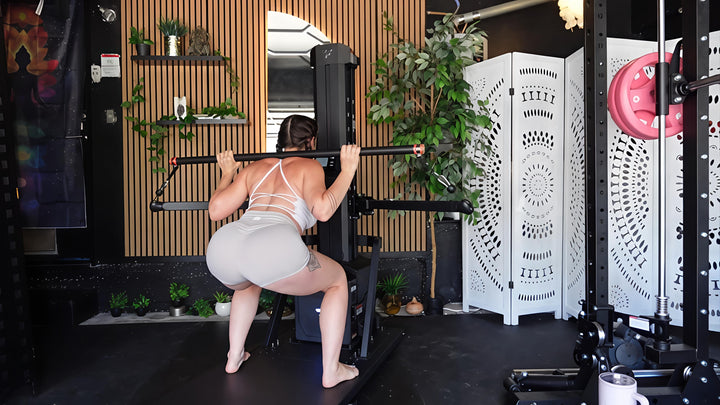
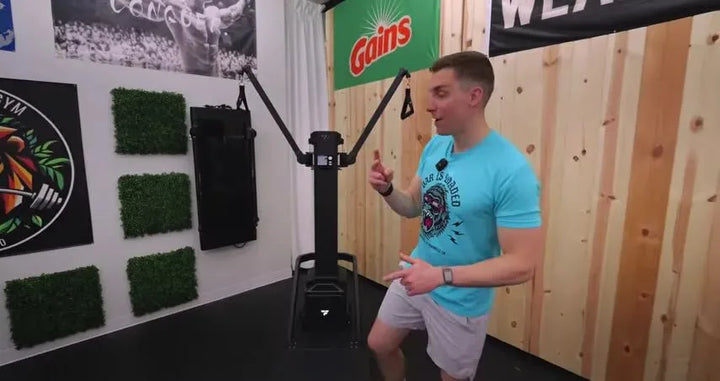
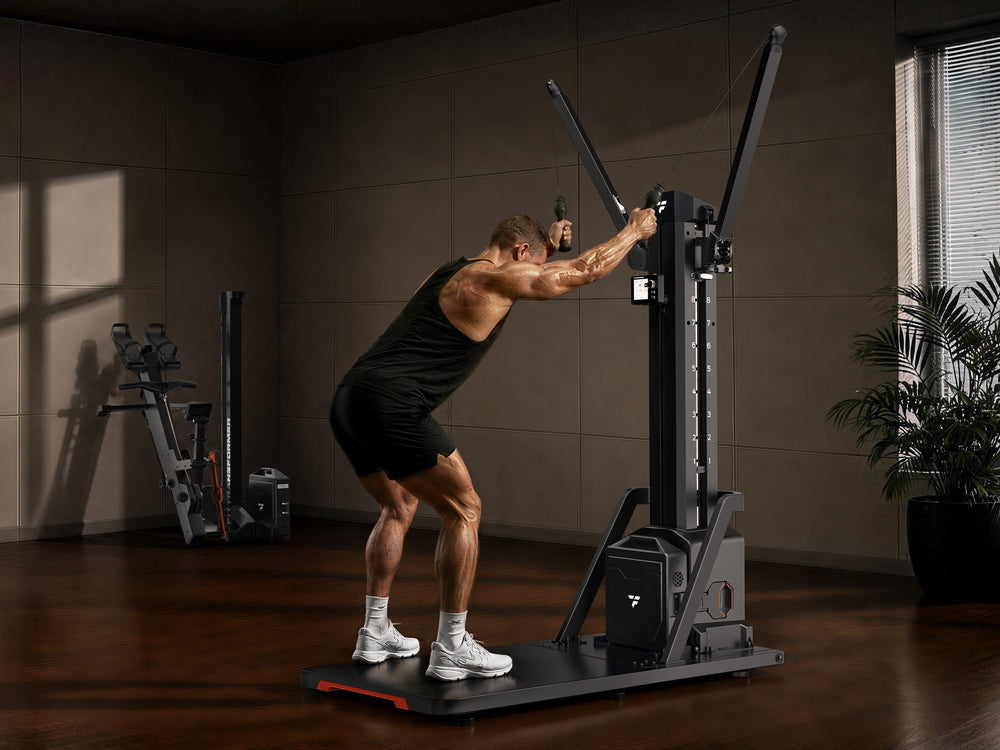
For the 20% to count, the hard days need to be genuinely hard. The FitTransformer Titan's cable system goes up to 264 lbs across pulling, pushing, and hinge patterns, enough to make strength and HIIT sessions deliver real stimulus.
What Are the Best Zone 2 Cardio Exercises?
Any activity that keeps your heart rate steady in Zone 2 works. Some are easier to control than others:
Walking (brisk). The most accessible option. Most people naturally land in Zone 2 at a brisk pace. Easy to sustain, zero equipment needed.
Cycling. Stationary or outdoor. Easy to hold a steady output, low joint stress. A good choice if running feels too intense to stay in Zone 2.
Rowing. Full-body effort means you reach Zone 2 at a lower speed than running. The 500m split gives a precise intensity reference. Joint-friendly and easy to control. The rowing machine from FitTransformer combines air, water, and magnetic resistance for precise Zone 2 control.
Swimming. Low impact, full body. Harder to monitor heart rate in real time, but the talk test still works.
Elliptical. Smooth, low impact. Less precise intensity feedback than cycling or rowing, but effective for steady-state Zone 2 work.
The best choice is the one you will do consistently for 30–60 minutes, three or four times a week.
How Do You Build Zone 2 Into a Weekly Training Plan?
Step 1: Find your Zone 2 intensity
Pick any cardio activity. Start easy and settle into a pace where you can speak in full sentences with an occasional breath pause. Note your heart rate and perceived effort. That is your Zone 2 reference point.
Step 2: Follow an 8-week progression
|
Phase |
Weeks |
Duration |
Frequency |
Focus |
|
Foundation |
1–2 |
20–25 min |
3x/week |
Find and hold Zone 2 |
|
Extension |
3–4 |
30–35 min |
3x/week |
Same intensity, longer sessions |
|
Volume |
5–6 |
35–40 min |
4x/week |
Build weekly minutes |
|
Integration |
7–8 |
Zone 2 x3 + HIIT x1 |
4x/week |
Add 80/20 structure |
Step 3: Track your progress
Every 4 weeks, do a Zone 2 session at the same perceived effort as week one. If you are covering more distance or moving faster at the same heart rate, the adaptation is working.
When to expect changes:
- Weeks 2–4: Same effort feels noticeably easier
- Weeks 6–8: Measurable improvement in pace or distance at Zone 2 intensity
- Months 3–6: Faster recovery between sessions, better endurance across all activities
Start Building the Base
Zone 2 is not complicated. Pick an activity, slow down enough to hold a conversation, and do it consistently. The aerobic base builds in the background.
For the strength and high-intensity side of the 80/20 structure, the FitTransformer Titan covers pulling, pushing, and hinge patterns up to 264 lbs in a compact home footprint.
FAQs
Q1: How do I know if I'm in Zone 2 without a heart rate monitor?
Use the talk test. If you can speak full sentences with an occasional breath pause but cannot sing comfortably, you are in Zone 2. If talking feels completely effortless, go harder. If you cannot finish a sentence, slow down.
Q2: Is 20 minutes of Zone 2 enough?
It is a starting point. Meaningful adaptation begins around 150 minutes per week. Build toward 45-minute sessions first, then increase frequency once that feels manageable.
Q3: Can Zone 2 training help you live longer?
VO2 max is one of the strongest predictors of long-term health outcomes. Zone 2 training builds the aerobic base that supports it. The 150-minute weekly activity target from most health organizations falls directly in Zone 2 intensity range. [[4]](#__4)
Q4: Is Zone 2 better than HIIT for fat loss?
Zone 2 burns a higher percentage of fat per session. HIIT burns more total calories. Over time, Zone 2 improves fat oxidation at all intensities. Both together produce better results than either alone.
Q5: What stroke rate should I use for Zone 2 rowing?
18–22 SPM works for most people. Start at 20, check your heart rate, and adjust from there. If heart rate runs high, drop to 18 and reassess before changing anything else. For full technique guidance, the Zone 2 rowing technique guide covers stroke rate, posture, and pacing in detail.