Not all cardio equipment is built for HIIT. High-intensity interval training puts specific demands on a machine, and the wrong choice leaves you hitting a ceiling before you hit your target heart rate. This breakdown covers the best HIIT workout equipment for home use, ranked by what actually matters for interval training: power response, joint impact, and the ability to track your effort objectively.
Quick Reference: Best HIIT Equipment for Home
| Equipment | Power Response | Joint Impact | Full-Body? | HIIT Rating |
|---|---|---|---|---|
| Ski Erg | Instant | Very Low | Upper-dominant | ★★★★★ |
| Rowing Machine | Fast | Very Low | Full Body | ★★★★★ |
| Air Bike | Fast | Low | Partial |
★★★★☆ |
| Jump Rope | Moderate | Medium | Lower-dominant |
★★★☆☆ |
| Treadmill | Slow | High | Lower only |
★★☆☆☆ |
What HIIT Demands from Equipment
1. Power Accessibility
Can the machine go from zero to peak output in 3 to 5 seconds? A ski erg or rowing machine can. A treadmill cannot. The belt needs time to accelerate, which means your sprint interval starts 5 to 10 seconds late every single time. In a 20-second Tabata window, that delay costs you a third of your working time.
2. Interval Transition Speed
Good HIIT equipment lets you stop and restart cleanly. The shift from work to rest should be instant, not a 10-second deceleration process. Machines that allow immediate stops keep your interval structure intact.
3. Joint Impact Load
High-frequency training adds up. Low-impact equipment lets you train more often without accumulating damage in your knees, ankles, and hips. This is why the best home hiit machines are almost always non-weight-bearing.
4. Resistance Accuracy
Can you repeat the same training stimulus next week? If the machine has no power or pace display, you're guessing at your output every session. HIIT progress is built on repeatable effort, not vibes.
Why Some Common Options Fall Short?
- Treadmills: Belt acceleration lag makes true sprinting difficult. High-speed running also carries fall risk and heavy knee and ankle impact.
- Dumbbell movements: Power output is capped by technique. Under fatigue, form breaks down before intensity peaks.
- Jumping jacks, high knees: Low intensity ceiling. These cannot reliably push heart rate to the 85-95% zone needed for genuine HIIT.
Four Best HIIT Equipment Options for Home, Ranked
#1: Ski Erg
The ski erg earns the top spot for HIIT specifically. The double-pull motion lets you reach peak power in about 2 seconds. There's no momentum to fight, no belt to wait for. You pull, you stop, you pull again. The interval structure is clean.
- Power response: Near-instant
- Joint impact: Lowest of any cardio machine (no weight-bearing at all)
- Interval switching: Immediate stop and restart
- Limitation: Upper-body dominant; lower body involvement is limited
- Best HIIT format: Tabata (20 seconds full effort / 10 seconds rest, 8 rounds)
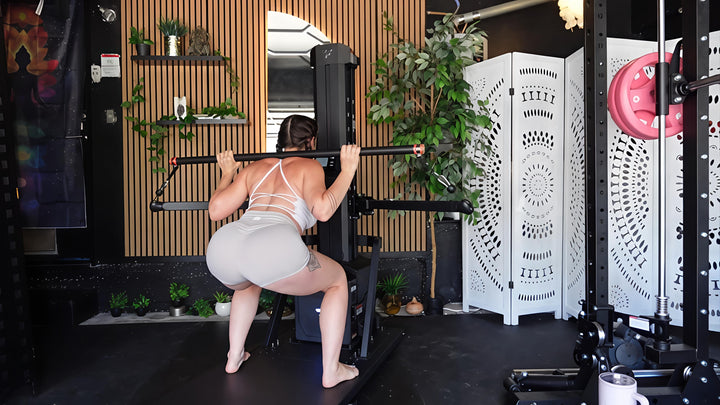
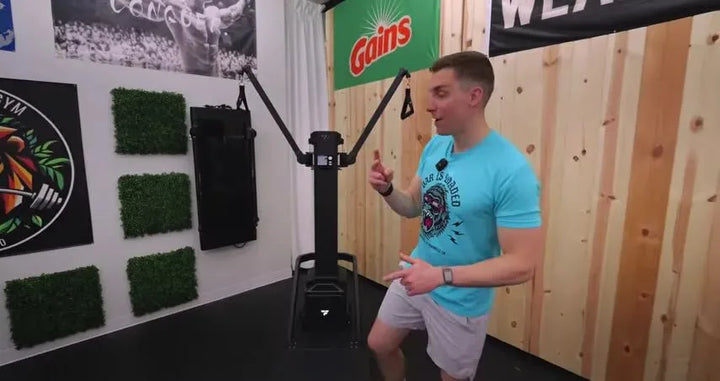
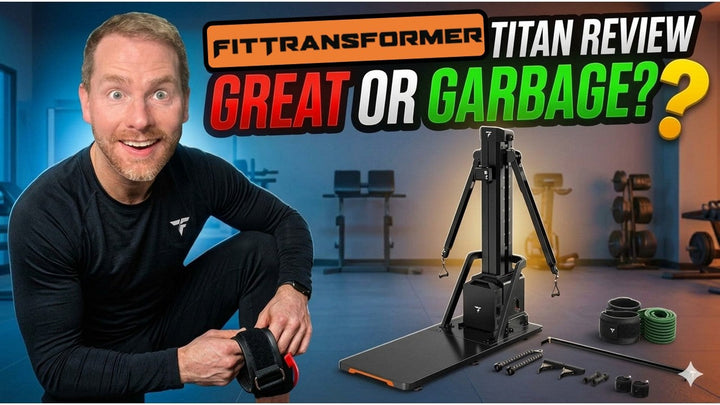
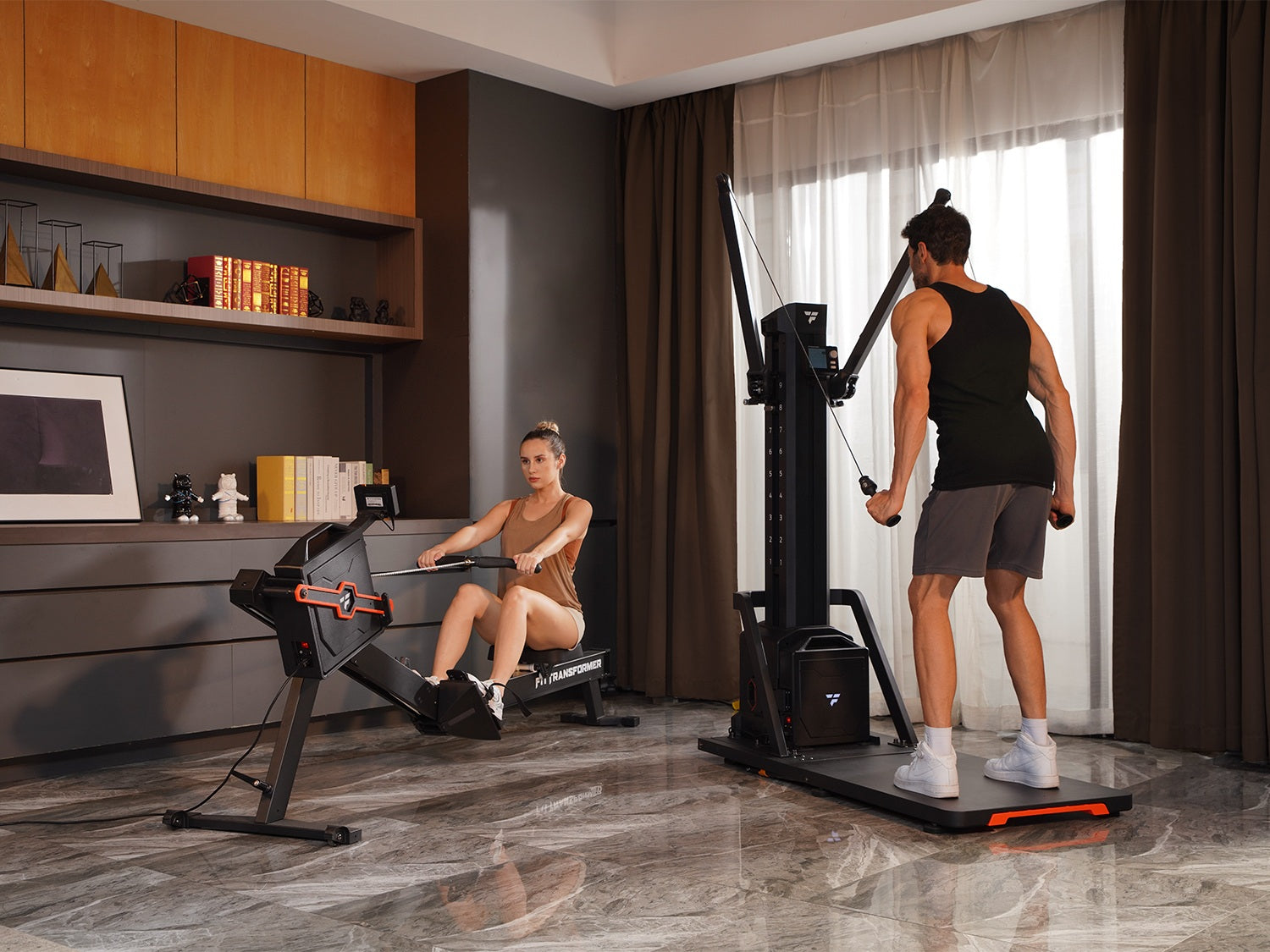
The FitTransformer Titan has a Ski mode built in. Use it the same way you'd use a standalone ski erg: pull for 20 seconds at full effort, stop completely, rest for 10.


#2: Rowing Machine
Rowing is the most complete HIIT tool for full-body conditioning. It engages legs, core, back, and arms in a single coordinated movement. Power output ramps up within 5 seconds, and the effort is trackable in real time through 500-meter split pace.

- Power response: Fast
- Joint impact: Very low
- Interval switching: Slightly slower reset than ski erg (requires resetting stroke rhythm)
- Best HIIT format: 500-meter sprint intervals, 4 to 6 rounds with 90 seconds rest between sets
#3: Air Bike
Air bikes scale resistance automatically with effort, which sounds ideal for HIIT. The harder you push, the more resistance you face. Full-body versions (with moving arms) have a very high power ceiling.
- Power response: High
- Joint impact: Low
- Limitation: Upper body engagement depends on the model. Leg-only versions remove half the workout.
#4: Jump Rope and Bodyweight Movements
These belong in a home training toolkit, but as HIIT's primary tool, they have a ceiling. Technique-dependent, no objective data output, and limited ability to push into the 85-95% heart rate zone consistently. Use them as warm-ups or active rest tools, not the main event.
How to Structure HIIT Workouts for Each Equipment Type
Knowing which machine to use is only half the picture. The interval format has to match what the machine does well.
Format 1: Tabata (20 Seconds On / 10 Seconds Off, 8 Rounds) - Best for Ski Erg
Tabata works perfectly on a ski erg because each 20-second window can genuinely reach maximum output. The 10-second rest is a natural stop. No deceleration. No reset lag. One full Tabata takes 4 minutes. A complete session typically runs 2 to 3 Tabata blocks with 3 to 4 minutes of rest between them.
On the FitTransformer Titan in Ski mode, watch the pace display across rounds. A significant drop by round 5 or 6 means you need more recovery between blocks, not more rounds.
Format 2: Distance Intervals - Best for Rowing Machine
Set a fixed distance target rather than a time target. 500 meters per interval gives you an objective benchmark. Your split pace at the end of interval 6 tells you exactly whether your output held or dropped compared to interval 1. That's data you can't get from "30 seconds all-out."
Sample session: 500 meters, 6 rounds, 90 seconds rest between rounds
Rowing on a FitTransformer Sail, record your 500-meter split pace after each interval. That single number tells you more about your session than any subjective rating of effort could.
Format 3: Power Intervals - Best for Machines with Watt Display
Target a specific watt output for a set time. Sustain 300 watts for 30 seconds, rest for 60, repeat 8 times. This is the most precise HIIT format available, and it's only possible on machines that display power output.
On a FitTransformer Sail or Titan in Ski mode, pick a watt target before the session and treat it as a floor, not a ceiling. Can't hold it by round 6? Drop the number by 10 to 15 watts and rebuild from there over the following weeks.
What to Look for When Buying HIIT Equipment for a Home Gym
Space
| Machine | Footprint | Foldable? |
|---|---|---|
| Ski Erg | ~24" x 32" (wall-mountable) | Yes (some models) |
| Rowing Machine | ~24" x 96" in use | Most fold vertically |
| Air Bike | ~36" x 48" | No |
Measure the actual usable floor area, including the space in front and behind you during movement. A machine that fits the room but not the movement is a bad buy.
Training Goal Match
- VO2 max improvement: Ski erg or rowing machine distance intervals
- Full-body fitness: Combine ski erg and rowing work in the same session. The FitTransformer Titan's Ski mode and strength frames let you do both without clearing floor space for two separate machines
- Low-impact recovery HIIT: Magnetic resistance rowing, where resistance is precise and consistent
Data Feedback Capability
HIIT progress requires objective measurement. Without a power or pace display, you're estimating your effort every session. Over time, estimation drift makes training inconsistent.
Two metrics to confirm before buying:
- Does it display watts?
- Does it display 500-meter split pace?
If the machine shows neither, tracking actual HIIT improvement becomes guesswork.
HIIT at Home
HIIT equipment works when it lets you reach real maximum intensity fast, hold it for a defined interval, and stop cleanly for recovery. Ski ergs and rowing machines meet those requirements consistently. Treadmills and dumbbell circuits mostly do not, not because they're bad tools, but because HIIT requires conditions those tools can't always provide.
Buy equipment matched to the physiology, then build the program around what the machine does well. If you already have a FitTransformer Titan or Sail, the interval formats in this article are ready to use with what you have right now.
FAQs
Q1: How many times a week should I do HIIT at home?
Two to three times per week is the recommended limit for most people. Beyond that, recovery suffers faster than fitness improves. Beginners should start with one to two sessions per week and fill the remaining days with lower-intensity cardio.
Q2: Is HIIT or steady-state cardio better for fat loss?
Neither is clearly superior on its own. HIIT produces a higher post-exercise calorie burn (EPOC) and takes less time. Steady-state cardio is easier to sustain. Most research supports combining both: two HIIT sessions plus two lower-intensity sessions per week delivers better results than either approach alone.
Q3: Can beginners do HIIT?
Yes. Beginners should base intensity on perceived effort rather than power numbers. Work intervals should feel very hard but not unsustainable. For the first four weeks, use a 1:3 work-to-rest ratio (example: 20 seconds on, 60 seconds off) to let your body adapt before shortening rest periods.
Q4: What's the difference between HIIT and circuit training?
HIIT requires work intervals at near-maximum heart rate (85-95%) followed by full recovery. Circuit training moves continuously between exercises and does not always reach true high-intensity thresholds. You can run a circuit at HIIT intensity, but standard circuit training and HIIT are not the same thing.