You finish 20 minutes on the rower, legs already burning, then walk straight to the squat rack. That set is going to be noticeably harder. Training order is not a minor detail. It shapes the quality of every session and your long-term results. Here is how science breaks it down by goal: fat loss, muscle gain, endurance, and general fitness, each with a clear answer you can put to use this week.
Quick-Reference Guide
|
Your Goal |
Do This First |
Then |
|
Fat loss |
Weights |
Cardio (20–30 min, moderate pace) |
|
Muscle gain |
Weights |
Light cardio or skip |
|
Endurance / performance |
Cardio |
Weights |
|
General fitness |
Either (slight edge to weights) |
The other |
Does Workout Order Actually Affect Your Results?
Yes. And the reason comes down to one word: glycogen.
Glycogen is the stored fuel your muscles draw from during exercise. Strength training is a heavy glycogen user. High-intensity cardio is too. Put both in the same session and whichever comes second is running on less fuel.
That creates three practical consequences:
- Strength output drops when muscles are pre-fatigued from cardio
- Fat burning picks up when cardio follows a weights session that has already drawn down glycogen stores
- Endurance pace suffers when heavy lifting comes before a long run
Research on concurrent training consistently shows that order influences both performance within a session and physical adaptation over time. The effect varies by goal, which is why the answer looks different depending on what you are training for.
Weights First If Your Goal Is Fat Loss
Do weights first, then cardio.
Strength training draws hard from your glycogen stores. By the time you move to cardio, those stores are substantially lower, and your body can optimize fat oxidation during the cardio portion, while ensuring your primary energy goes toward the high-intensity demand of lifting.
Research on concurrent training supports this pattern. Studies comparing the two sequences have found higher rates of fat oxidation during the cardio portion when it follows resistance training rather than precedes it.
In Practice
- Weights: 35–45 minutes of compound lifts (squats, deadlifts, rows, presses)
- Cardio: 20–30 minutes of moderate-intensity steady state (a brisk pace on the rower, a moderate jog, or a ski ergometer session)
What to Skip
A long, hard cardio session done first leaves you too depleted to lift with good form or meaningful load. That undercuts both fat loss and muscle retention in one move.

Weights First If Your Goal Is Muscle Gain
Weights always come first.
Muscle growth depends on the quality of your strength sets: motor unit recruitment, full range of motion, and progressive overload over time. All of that erodes when your central nervous system is already taxed from cardio.
Cardio before lifting does not simply make you tired in a vague way. It specifically reduces force production capacity, and force production is the core stimulus for hypertrophy.
LISS vs. HIIT: Which Interferes More?
|
Cardio Type |
Interference with Muscle Growth |
|
LISS (low-intensity steady state, e.g., easy rowing) |
Low, particularly if kept under 30 minutes after lifting |
|
HIIT (high-intensity intervals) |
Higher, due to greater CNS demand and glycogen competition |
For muscle gain with same-day cardio, keep it low intensity and schedule it after your weights session. Separating them by several hours works even better, as does saving cardio for alternate days entirely.
Cardio First Only If Endurance Is Your Primary Goal
Put cardio first when endurance performance is the priority.
This is the one clear exception to the weights-first default. Runners, cyclists, and rowers training for distance or pace need their sharpest output for their primary discipline. Lifting heavy before a quality long run introduces fatigue that directly degrades pace and form.
For endurance athletes, strength work is a supporting element, not the centerpiece. Give the centerpiece your best energy.
Endurance Training vs. Cardio for General Health
There is a real difference between training for a 10K and simply wanting better cardiovascular fitness. If you are not working toward a specific event or performance target, you most likely fall into the fat loss or general fitness category rather than the endurance exception.
For General Fitness, Consistency Beats Perfect Order
No single performance goal in mind? The order gap narrows considerably.
Studies show the sequencing effect is strongest when one adaptation clearly dominates the training objective. For general fitness, the difference in outcome between weights-then-cardio and cardio-then-weights is relatively small.
A slight lean toward weights first is still a reasonable default. Strength work requires more neuromuscular precision, and most people find their form and focus are sharper at the start of a session. The bigger variable is not sequence. It is showing up consistently.

How to Plan Your Week Around This at Home
Knowing the right order is useful. A practical weekly structure makes it automatic.
Fat Loss Focus (3–4 Days per Week)
|
Day |
Session |
|
Monday |
Weights (40 min) + Cardio (25 min) |
|
Tuesday |
Rest or light activity |
|
Wednesday |
Weights (40 min) + Cardio (25 min) |
|
Thursday |
Rest |
|
Friday |
Weights (35 min) + Cardio (30 min) |
|
Saturday |
Cardio only (30–40 min) |
|
Sunday |
Rest |
Muscle Gain Focus (4 Days per Week)
|
Day |
Session |
|
Monday |
Weights, upper body |
|
Tuesday |
Weights, lower body |
|
Wednesday |
Rest or 20-min easy cardio |
|
Thursday |
Weights, upper body |
|
Friday |
Weights, lower body |
|
Saturday |
Light cardio (20–25 min) |
|
Sunday |
Rest |
General Fitness (3 Days per Week)
|
Day |
Session |
|
Monday |
Weights (30 min) + Cardio (20 min) |
|
Wednesday |
Cardio (30 min) + Core work |
|
Friday |
Weights (30 min) + Cardio (20 min) |
The Home Training Friction Problem
At home, the hardest part of pairing cardio and strength in one session is often the transition. Finishing a weights block and then needing to rearrange equipment or set up a separate machine breaks momentum and eats into the time available for cardio.
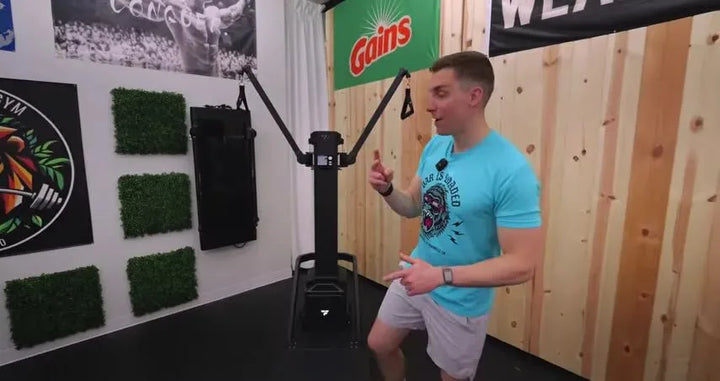
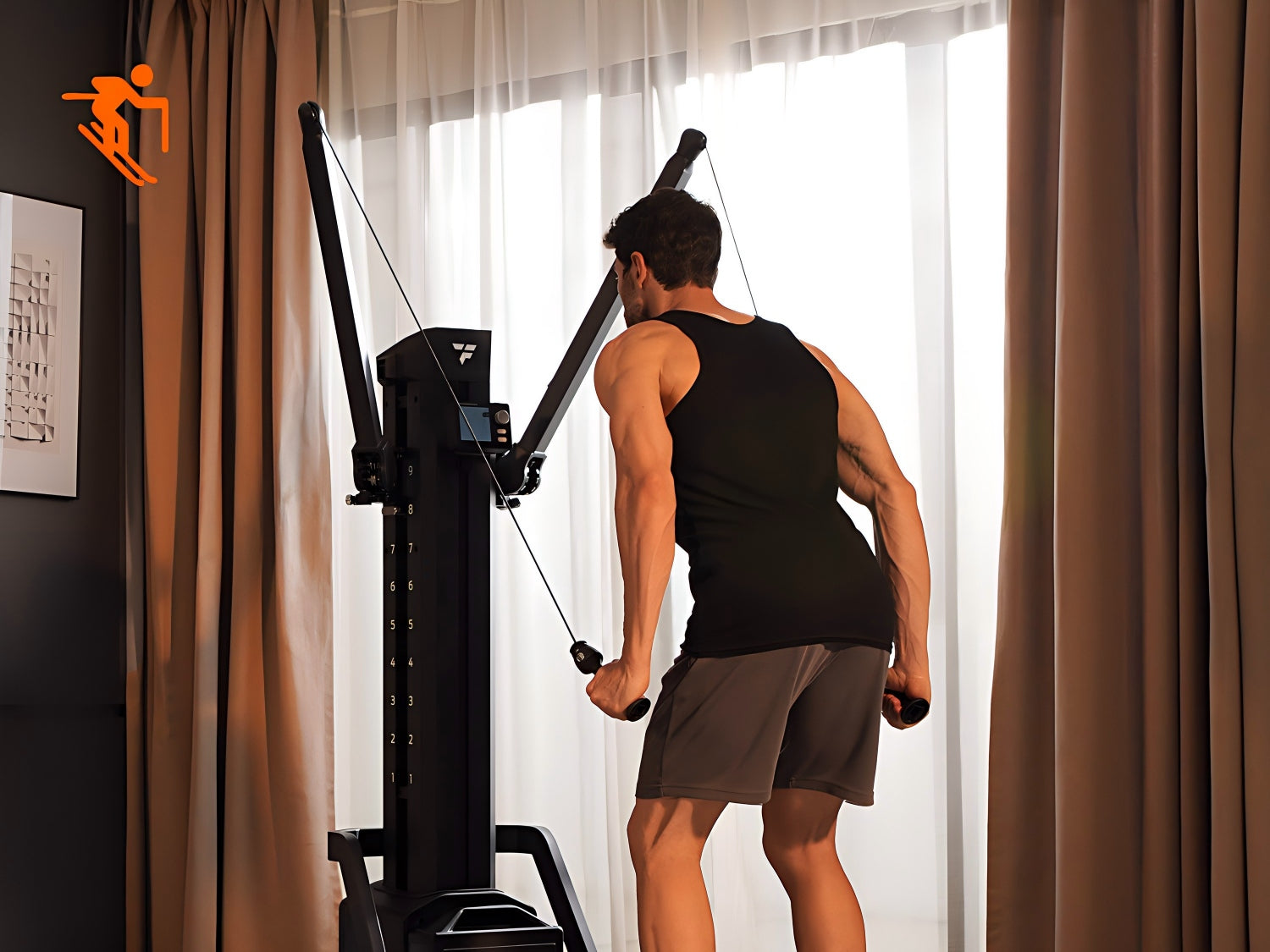
Equipment that handles both modes without a setup interruption changes that equation. The FitTransformer Titan moves between strength training and ski cardio mode in seconds. The FitTransformer Sail covers rowing with air, water, and magnetic resistance in a single machine. The shift from a lifting session to cardio requires no floor space rearrangement and no lost minutes. For anyone building a home gym around doing both cardio and strength, that kind of home gym equipment removes the friction that makes it easy to skip the second half of a session.
Start With the Right Order for Your Goal
Your goal determines your sequence. Fat loss and muscle gain call for weights first. Endurance performance calls for cardio first. General fitness gives you flexibility, with a slight lean toward weights. Pick your category, follow the structure, and train consistently. If you are building a home setup that supports both cardio and strength without wasted transitions or sacrificed space, FitTransformer is built exactly for that. One system, both goals, no compromises.

FAQ
Q1: Does doing cardio before weights hurt muscle growth?
Yes, it can. Cardio before lifting raises fatigue and reduces force production capacity during strength sets, and force production is the primary driver of muscle growth. Even moderate cardio done first can reduce the quality of your lifting session. For muscle gain, lifting comes first.
Q2: Can I do cardio and weights on the same day?
Absolutely. Training both in a single session works well for most people. The key is sequencing them correctly for your goal and keeping total volume manageable. Forty-five minutes of weights followed by 20 to 30 minutes of cardio is a practical, effective structure that does not require splitting your day into two separate sessions.
Q3: How long should I wait between cardio and weights?
Six or more hours of separation gives your glycogen stores and nervous system solid recovery time. For most people, back-to-back same-session training is fine as long as the order is right. Cardio in the morning and weights in the evening works well across all goals.
Q4: Is HIIT cardio or strength for workout order purposes?
HIIT belongs in the same category as strength training for sequencing purposes. It places heavy demands on your glycogen stores and central nervous system, similar to a tough lifting session. Treat it accordingly: if fat loss is the priority, HIIT can follow weights, though many experts recommend saving true HIIT for non-lifting days to allow for central nervous system recovery.
Q5: What if I only have 30 minutes at home?
Drop the cardio-weights split and run a circuit-style session instead. Alternate between compound strength movements like squats, rows, and presses with short rest intervals. Heart rate stays elevated, and you get both metabolic and strength stimulus in the time available. Equipment that handles both modalities without a setup change makes this format much easier to execute at home.