Every January, millions of people set up home gyms fully intending to change their bodies. By April, most of those machines are collecting dust. Studies of commercial gym members show that more than 50% of new exercisers quit within three months, and home gym users often follow a similar dropout pattern, sometimes even worse due to fewer external constraints.
No membership fee pulling you back. No class to show up for. The conditions are set up for quitting. These are the six real reasons it happens and what to do about it.
Quick Overview: Why Home Gym Users Quit
|
# |
Reason |
Root Cause |
|
1 |
Body adapts before you see results |
Physiological accommodation |
|
2 |
Progress goes invisible |
No tracking system |
|
3 |
Relying on motivation |
Motivation follows results, not the other way around |
|
4 |
Goal without a plan |
Decision fatigue from unstructured training |
|
5 |
Home environment works against you |
Space association and distraction |
|
6 |
Equipment hits its limit before you do |
Single-function gear with no room to grow |
Reason 1: Your Body Adapts Before You See the Results
Science Behind the Drop-Off
Your body can start adapting to the same training stimulus in as little as 6–8 weeks. By month three, the workouts that once challenged you have long become routine. You're putting in the same effort, but your body has already adapted and slowed down its rate of progress.
Exercise scientists call this accommodation: your nervous system and muscles become highly efficient at a specific movement pattern, which means less stimulus, less adaptation, less growth. The National Strength and Conditioning Association recommends rotating training variables every few weeks precisely because of this.
Once the body accommodates to a stimulus, continuing that same routine produces diminishing returns, and can even lead to slight regression.

Why Home Gyms Make This Worse
At a commercial gym, you can walk over to a cable machine, switch to a barbell, or sign up for a new class. Variety is built into the environment. Most single-function home gym equipment doesn't work that way. One machine, one movement pattern, used until your body no longer needs it.
The fix: introduce a new training variable every 6–8 weeks. It doesn't have to be a full program overhaul. Changing resistance type, rep range, or movement plane is enough to restart adaptation.
Some home gym systems offer up to 8 training modes across strength, ski, and three rowing resistance types. Switching training stimuli becomes a real option, not something that requires buying entirely new equipment.
Reason 2: Progress Goes Invisible Before It Goes Away
The Gap Between Real Progress and Visible Results
Most people quit not because they stopped progressing, but because they stopped seeing it. Body composition changes take 10–12 weeks to become visible in the mirror. Strength gains, on the other hand, can start showing up in week two.
The problem: if you're not tracking them, you can't feel them.
Human perception is poor at noticing gradual physical change in yourself, but it's very responsive to numbers. If you squatted 95 lbs in week one and 115 lbs in week four, that's real progress. Without a log, that number disappears the moment you close the gym door. The feeling that replaces it? "Nothing is working."
No visible progress = no sense of forward movement = training stops feeling worth it.

Track Performance, Not Just Appearance
|
What to Track |
Why It Matters |
|
Weight lifted per exercise |
Shows strength gains before the mirror does |
|
Reps completed |
Reveals endurance and capacity growth |
|
Session duration |
Tracks stamina over time |
|
How you felt |
Flags recovery issues early |
Start logging from day one. The goal of each session isn’t just to “feel worked.” It's to do slightly more than last time. One extra pound, one extra rep. Numbers give you a reason to come back before the mirror gives you a reason to stay.
Reason 3: You're Relying on Motivation Instead of a System
Motivation Is a Result, Not a Cause
Motivation is a result, not a cause. When training produces results, motivation follows automatically. And the reverse is equally true: when progress stalls, motivation fades. Not because of weak character, but because the brain runs on feedback. No feedback, no drive.
Treating motivation as a fuel source is like only eating when you feel hungry. It works most of the time, but the moment stress, fatigue, or a busy week hits, the feeling disappears, and so does the workout.
Build Triggers, Not Willpower
Research on habit formation consistently shows that consistent behaviors are built on triggers and action chains, not emotional states. Think about brushing your teeth: you don't wait until you feel motivated to do it. You do it because it follows a fixed cue at a fixed time. Training can work the same way.
Practical trigger system:
- Fixed time: Same slot each day removes the daily negotiation
- Entry ritual: Changing into workout clothes signals the brain to shift modes
- Pre-decided session: Know exactly what you're training before you walk in, not in the moment
- Minimum viable session: On low-energy days, commit to 10 minutes. Starting is the hardest part.
When training becomes a trigger-based routine, the question shifts from "do I feel like it?" to "it's Tuesday at 7am, this is what I do." That's a much more reliable foundation than mood.

Reason 4: You Have a Goal but No Plan to Get There
The Difference Between a Goal and a Plan
"Get stronger" is a wish. "Deadlift 20 lbs more by week 8" is a plan. Most home gym users only have the first.
Unstructured training creates a hidden tax every session: you have to decide what to do. That decision burns real mental energy. Psychologists call it decision fatigue. Even small, repeated choices deplete the cognitive resources needed to follow through. Research consistently shows that decision fatigue reduces the likelihood of completing tasks, even ones you actually want to do.
It plays out like this: you change into your workout clothes, walk over to the equipment, and spend five minutes trying to remember what you did last time. You end up doing the same three exercises as always, cut the session short, and walk away with a vague sense that it didn't really count. The problem wasn't energy. It was the absence of a plan.
Why a Ready-Made Plan Beats a Perfect Plan
A plan's core value isn't structure. It's that it removes decisions. Open it, execute, finish, leave. No mental overhead required.
The best training plan is the one you'll actually run. A generic 6-week plan you follow beats a customized perfect program you keep tweaking and never finish.
FitTransformer's Training Library, for example, offers structured programs built around the system's training modes, so "what should I train today" has an answer before you even walk in.

Reason 5: Your Home Environment Works Against Your Workout
The Same-Space Problem
The same space where you relax is the hardest space to train in. This is one of the most overlooked disadvantages of the home gym setup, and one that commercial gyms solve by default.
Walk into a gym and your brain activates a context it associates purely with effort. The equipment, the people, the sounds all cue "training mode." At home, the couch is five feet away. The fridge is visible. Your phone is where it always is. The brain's rest associations and training associations compete in the same square footage.
Research on environment design shows that human behavior is far more shaped by physical surroundings than by willpower. The same person will train more consistently in a space dedicated to training than in a multipurpose room, not because they try harder, but because the space removes competing cues.
Design Your Space to Work for You
You don't need a separate room. You need a clear signal boundary:
- Define the zone: Mark off your training area physically, even if it's just a mat on the floor
- Remove competing distractions: Phone on Do Not Disturb during training windows
- Use a start ritual: The same song, the same pre-workout routine gives your brain a reliable "we're starting now" cue
- Equipment visibility: Keeping gear visible (not stored away) lowers the friction of starting
A dedicated training space doesn't just reduce distraction. It changes what the brain expects to do when you enter it.

Reason 6: Your Equipment Hits Its Limit Before You Do
The Single-Machine Trap
The inherent flaw of much standalone home equipment is its static nature. It’s engineered to perform one function, indefinitely. Your fitness, however, is a dynamic process of progression. When your capacity outgrows what the machine can offer (resistance ceiling, movement variety, training modality), there's nowhere to go.
This is the most structurally unfair comparison between home gyms and commercial gyms. A commercial gym member never has to "upgrade the equipment" since the variety is already there. A home gym user who hits the ceiling on their one machine has three options: buy something new, repeat the same plateau indefinitely, or stop. Most choose the third.
Modular Thinking as the Fix
The smarter approach is to invest in equipment that can grow with you, not replace itself.
|
Traditional Equipment |
Modular Equipment |
|
One machine, one function |
One core, multiple frames |
|
Ceiling = max resistance |
Ceiling = next training mode |
|
Replace when outgrown |
Expand when ready |
|
Multiple purchases over time |
Single ecosystem upgrade path |
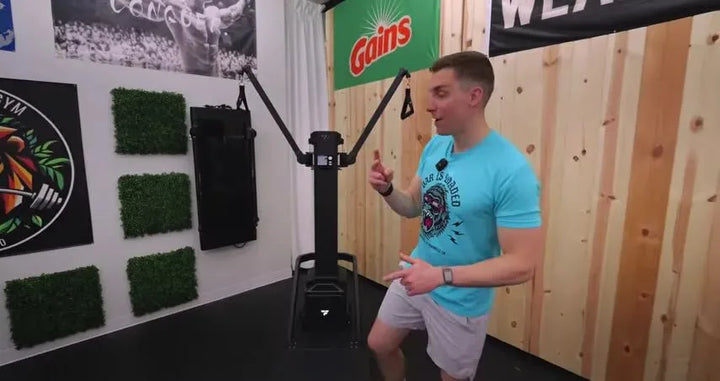
FitTransformer's modular system is built specifically around this problem.The Titan covers strength and ski training. The Sail offers air, water, and magnetic rowing resistance, delivering three distinct training experiences in one frame. The removable Core Module connects across compatible frames, so the system expands with your training needs rather than becoming the ceiling. That's what makes long-term consistency structurally possible, not just theoretically desirable.

Conclusion: The Real Pattern
None of these six reasons is about effort or intention. Most people who quit had both.
What they ran into were structural gaps: a body that adapted without new stimulus, progress that happened but stayed invisible, a routine that relied on daily motivation instead of a fixed system, no plan to remove decision fatigue, a home environment that wasn't set up for training, and equipment that stopped keeping pace.
Personal commitment still matters. But commitment applied to a broken setup produces frustration, not results. Fix the setup, and the same effort goes further. If your home gym has already hit its equipment ceiling, or you've been running the same routine for months, the FitTransformer modular system is worth a real look. Explore it at fittransformer.com.
FAQs
Q1: How long does it take to build a consistent home gym habit?
Research from University College London puts the average habit formation timeline at 66 days, not the commonly cited 21. The first three weeks are the most fragile; any interruption can reset momentum. A practical approach: for the first two months, make "showing up" the only metric. Don't grade workout quality. Once the habit automates, the effort required to maintain it drops sharply.
Q2: How do I stay accountable without a gym partner at home?
Home gym users lose the social pressure that commercial gyms provide naturally. Effective substitutes include public commitment (telling someone your schedule or posting check-ins in a community), a training log (being accountable to your own record), or adding sessions to your calendar as fixed appointments. The shared logic across all three: shift the behavior trigger from internal willpower to external structure, so the decision to train doesn't rely on how you feel that day.
Q3: Is it harder to stay consistent with a home gym than a commercial gym?
Short-term and long-term answers differ. Early on, the social atmosphere and dedicated space of a commercial gym do support consistency. Over time, the home gym's zero-commute advantage becomes the most powerful retention factor: every friction point you remove increases how often a behavior occurs. The main challenge for home gym users isn't equipment; it's conditioning the space itself to feel like a training environment. Solve that, and long-term consistency often exceeds what a commercial gym produces.
Q4: Is it okay to train every day in a home gym?
Daily training isn't the same as overtraining. The key is intensity and muscle group rotation. High-intensity work on the same muscle group needs 48–72 hours of recovery. Daily light activity (mobility work, low-intensity cardio, stretching) is completely sustainable. What to avoid: using the same exercises at the same intensity on the same muscles day after day. That pattern causes both accommodation and injury risk, not just fatigue. Burnout typically comes from that kind of repetition, not from training frequency itself.
Q5: How do I know when it's time to upgrade my home gym equipment?
Three clear signals: (1) Maximum resistance no longer brings you to muscle fatigue within 8–12 reps. (2) The movement patterns you want to train aren't supported by current equipment. (3) Your exercise selection has been fixed for more than 6 weeks with no new training stimulus introduced. Any one of these means the equipment is limiting you, not the other way around. At that point, upgrading is more efficient than repeating a plateau.