You finish a set of curls, rack the weight, and move on. The two seconds it took to lower the dumbbell back down barely registered. That lowering phase is where a large part of each rep's muscle-building stimulus actually happens. Controlling it deliberately is a direct way to get more from the training you are already doing.
What Is Eccentric Training
Eccentric training means slowing down the lowering phase of a movement, the part where your muscle lengthens under load.
Every strength exercise already has two phases:
|
Phase |
What happens |
Example (bicep curl) |
|
Concentric |
Muscle shortens, you move against resistance |
Curling the weight up |
|
Eccentric |
Muscle lengthens, you control the weight back |
Lowering the weight down |
Eccentric training makes the lowering phase the focus by slowing it to 3 to 4 seconds. The muscle stays under tension longer and gets a stronger signal to grow.
No new exercises needed. It is a change in tempo, not in what you do.
Why It Builds More Muscle Than Regular Lifting
Your muscles are actually stronger during the lowering phase than the lifting phase. That means they can handle more load at that moment, and more load sends a stronger signal for growth.
Three things explain why this matters:
Higher Tension Across the Muscle
When a muscle lengthens under load, it is exposed to tension along its full length. That tension is a key trigger for muscle protein synthesis, the process through which your body builds new muscle tissue.
More Fast-Twitch Fiber Activation
Eccentric contractions recruit fast-twitch muscle fibers more fully than lifting does. These fibers have the highest growth potential in the body.
More Growth, Less Energy Cost
Research comparing eccentric and concentric training found that eccentric protocols produced around 10% increases in muscle mass, compared to 6.8% for concentric-only training. Eccentric contractions also require far less metabolic energy to produce, so you get a stronger growth stimulus without as much overall fatigue.
Rushing through the lowering phase consistently leaves the most productive part of each rep unused.

How to Start Today With What You Already Have
The starting point is simple: take 3 to 4 seconds on every lowering phase, in the exercises you already do.
Tempo Guide for Three Common Movements
|
Exercise |
Lowering phase |
Pause |
Lifting phase |
|
Squat |
4 seconds down |
Short pause at bottom |
Normal speed up |
|
Push-up |
3 to 4 seconds down |
None needed |
Normal speed up |
|
Dumbbell row |
3 to 4 seconds back to start |
None needed |
Normal speed pull |
Starting Volume
- 3 sets of 6 to 8 reps per exercise
- 2 to 3 sessions per week per muscle group
- 1 to 2 eccentric-focused movements per session is enough
Focusing on one or two movements per session is enough to feel a clear difference without making recovery harder.
Expect more muscle soreness in the 24 to 48 hours after your first few sessions. Eccentric contractions create more micro-damage to muscle fibers than standard lifting. That is a normal part of the adaptation process, not a sign that something went wrong.
Why Most Home Gym Equipment Holds You Back
Bodyweight and dumbbell tempo work is a solid place to start, but free weights have a built-in limitation that shows up as training gets more serious.
The Resistance Problem With Free Weights
With a dumbbell curl, the resistance is highest at 90 degrees and drops off at the bottom of the rep, exactly where the muscle is most lengthened and most capable of handling load. Resistance bands have a similar problem in reverse: they are lightest at the start of a movement and heaviest at the end of the stretch, which works against the controlled loading eccentric training calls for.
|
Equipment |
Resistance at full muscle length |
Eccentric overload possible? |
|
Dumbbells |
Low (gravity angle reduces it) |
No |
|
Resistance bands |
High (bands are fully stretched) |
No |
|
Cable/pulley system |
Consistent throughout |
Yes |
Free weights cannot apply more resistance during the lowering phase than during the lifting phase. For true eccentric overload, the equipment needs to keep tension consistent through the full range of motion, regardless of where gravity is pulling.

What Equipment Actually Supports Eccentric Training
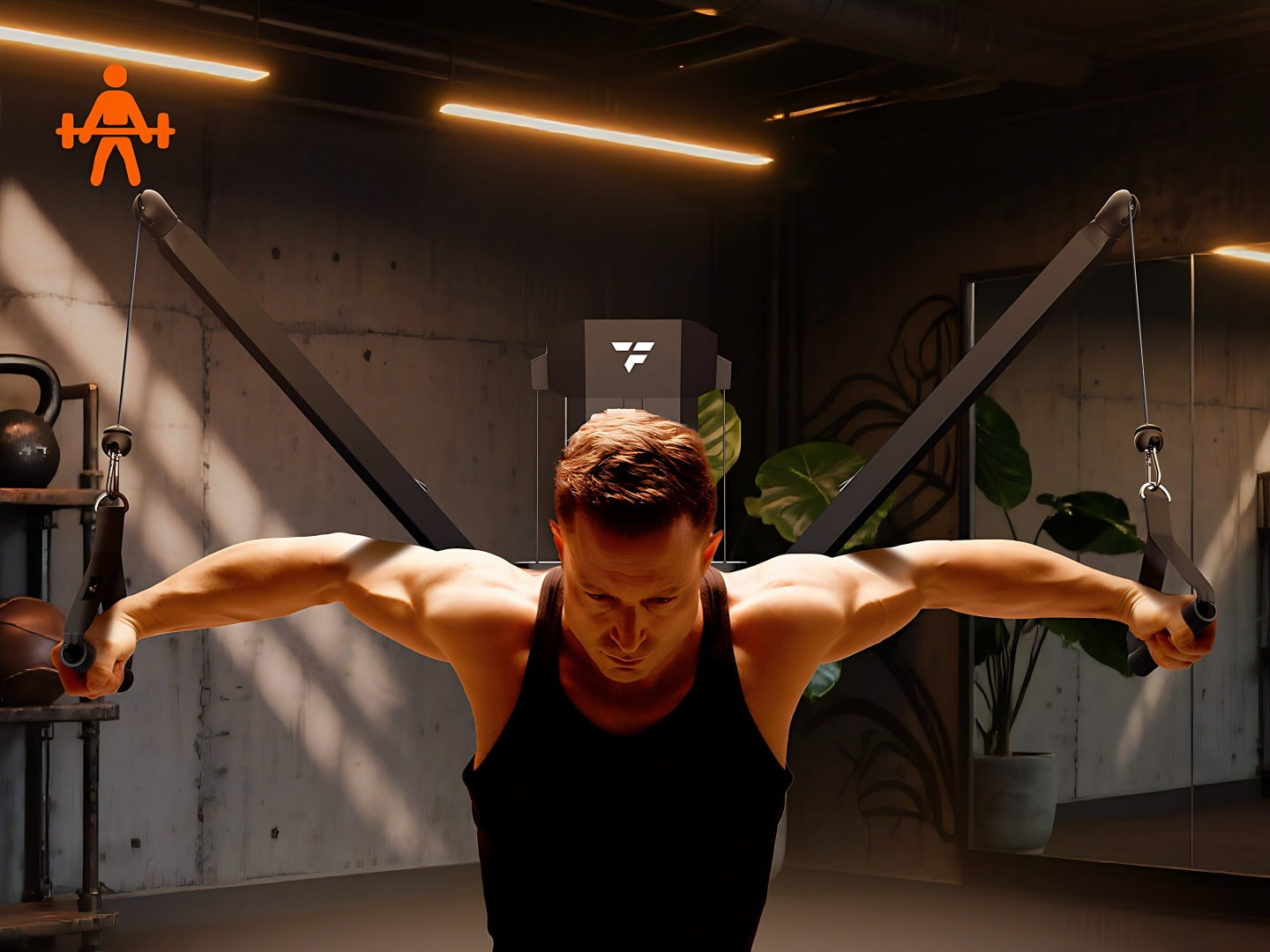
Cable and pulley systems solve this problem. A cable keeps tension consistent throughout the full range of motion, so the load does not drop off at the bottom of a curl or the start of a row. The muscle stays loaded through the entire lowering phase.
What to Look for in a Home Setup
The challenge for home use has been that most cable machines are wall-mounted, take up a lot of floor space, or are fixed at a single resistance angle. The angle matters because loading the lowering phase effectively for different exercises requires matching the direction of resistance to how each muscle moves through its lengthened position.
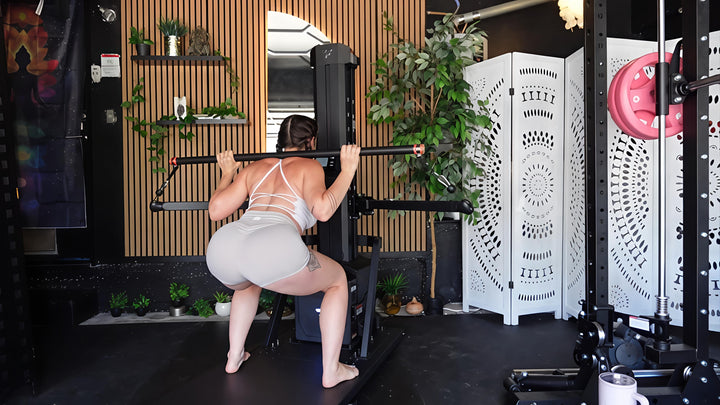
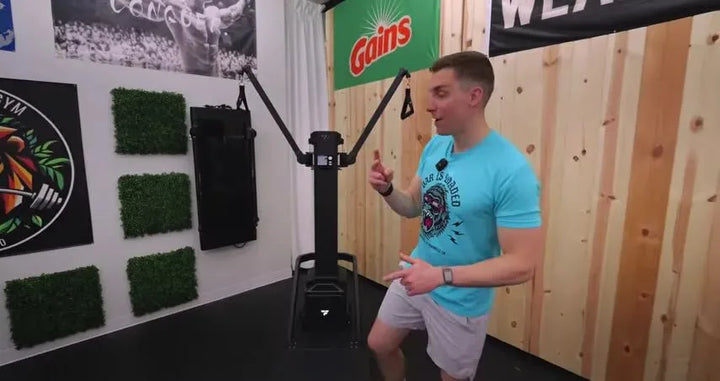
Modular home gym systems with a repositionable resistance core handle this better than fixed machines. FitTransformer's Core Module connects to different frames and supports arm adjustments in multiple directions, including height, forward-back tilt, and rotation. That lets you set the resistance angle to match each exercise rather than work around a fixed point.
For anyone doing serious eccentric work at home, that level of adjustability makes a real difference across different movement patterns.
The Most Common Mistakes and How to Fix Them
Passive Lowering
Slowing a rep down while the muscles relax looks like eccentric training but does not produce the same result. The working muscle needs to actively resist the load for the full lowering phase. If the movement feels easy, tension has already been lost.
Going Too Slow
3 to 4 seconds is the range that research connects to muscle growth. Beyond 5 seconds, form tends to break down and the extra time under tension does not produce more gains. Controlled tension is the goal, not the slowest possible rep.
Adding Too Much Too Soon
Eccentric training creates more muscle damage than standard lifting. Starting with one eccentric-focused exercise per session for the first two weeks gives the body time to adapt before increasing volume. Jumping ahead leads to excessive soreness and slower recovery.
Dropping the Concentric Phase
The lowering phase works best as part of a complete rep. A slow, controlled descent paired with a full, deliberate lift produces better results than treating the two phases as separate from each other.
Make Every Rep Count
Eccentric training works by making the part of the rep you already do into something deliberate. Slow the lowering phase to 3 to 4 seconds, keep active tension throughout, and start with a manageable volume. As your training progresses, having a modular home gym system that holds consistent resistance through a full range of motion takes results further than most home gym equipment. Explore the full setup at Fittransformer.

FAQ
Q1: What is the difference between eccentric and concentric training?
Concentric training focuses on the lifting phase, when the muscle shortens. Eccentric training focuses on the lowering phase, when the muscle lengthens under load. Both phases exist in standard exercises. Eccentric training slows the lowering phase deliberately to increase tension and stimulate more muscle growth.
Q2: How slow should the lowering phase be?
3 to 4 seconds is the range that research supports for muscle growth. That pace keeps meaningful tension on the muscle without making it hard to maintain good form. Going beyond 5 seconds does not tend to increase the benefit and makes control harder to hold through the full rep.
Q3: Is eccentric training safe for beginners?
Yes. Controlled lowering is appropriate for any training level and can help reduce injury risk by building strength through a full range of motion. Start with one eccentric-focused exercise per session and give yourself two weeks before adding more. Extra soreness in the first week or two is normal and expected.
Q4: Can eccentric training support injury prevention?
It can. Eccentric work strengthens the muscle-tendon unit in the lengthened position, where many strains happen. It is a common part of rehabilitation for issues like Achilles tendinopathy, hamstring strains, and knee pain. If you are managing an existing injury, check with a physical therapist before adding eccentric-specific loading.
Q5: Do I need special equipment to get started?
No. Slowing the lowering phase of bodyweight or dumbbell exercises is a practical and effective starting point. For eccentric overload, where the lowering phase carries more resistance than the lifting phase, a cable or pulley system provides more consistent tension than free weights. That is where equipment starts to make a more direct difference.