The best home gym equipment for weight loss is not automatically the machine that claims to burn the most calories. Equipment helps when it makes aerobic activity and progressive resistance training easier to repeat consistently, while food intake still matters to the overall energy balance that influences body weight.
No single piece of home gym equipment causes weight loss or reliably targets belly fat; equipment helps by making consistent exercise easier to perform.
Can Home Gym Equipment Actually Help You Lose Weight?
Yes. Exercise can contribute to reductions in body weight and body fat, but buying a machine does not create those changes by itself.
A 2024 systematic review and dose-response meta-analysis examined 116 randomized clinical trials involving 6,880 adults with overweight or obesity. In that population, increasing moderate-to-vigorous aerobic exercise was associated with progressively larger reductions in body weight, waist circumference, and body-fat measures across the exercise durations studied.

That is different from saying everyone needs a specific machine or a fixed number of workout minutes to lose weight.
Home gym equipment mainly gives you a practical way to:
- accumulate aerobic activity regardless of weather or gym access;
- make resistance training progressively harder;
- repeat the same workouts consistently enough to measure progress;
- reduce setup friction when exercising at home.
You can also start without buying anything. Walking, bodyweight squats, push-up variations, lunges, hinges, and other bodyweight exercises can all contribute to a home training routine.
The important question is therefore not simply, “What machine burns the most calories?” It is, “What type of exercise can I perform consistently, and what equipment makes that easier?”
Cardio vs Strength Training for Weight Loss: What Each Actually Does
Cardio and resistance training can both support weight-management goals, but they do not produce identical adaptations.
|
Training Type |
Main Role During Weight Loss |
What It Does Not Guarantee |
|
Aerobic training |
Increases activity-related energy expenditure and improves aerobic fitness |
A specific amount of weight loss from a given number of minutes |
|
Resistance training |
Builds or maintains strength and helps support fat-free mass |
Large weight loss simply by increasing resting metabolism |
|
Combined training |
Allows both aerobic and resistance adaptations in the same overall program |
Better results than every other approach for every outcome |
What Cardio Contributes
Walking, running, cycling, rowing, and ski-erg training can all increase the amount of energy used through physical activity.
In the 2024 meta-analysis above, more weekly moderate-to-vigorous aerobic exercise was generally associated with larger changes in adiposity measures among adults with overweight or obesity, up to the range studied. Around 150 minutes per week was associated with clinically important changes in waist circumference and body-fat measures in that research population. That is useful context, not an individual weight-loss guarantee.
The CDC also uses at least 150 minutes of moderate aerobic activity per week as a general health benchmark for adults. Some activity is still better than none, and those minutes do not have to come from one machine or one type of workout. CDC adult activity guidelines also recommend muscle-strengthening activity on at least two days per week.
What Strength Training Contributes
Strength training should not be included because of a vague promise that muscle will make you “burn calories all day.”
Its more useful role during weight loss is preserving or building strength and helping protect fat-free mass.
A resistance exercise meta-analysis of adults with overweight or obesity undergoing dietary weight loss found that adding resistance exercise did not produce significantly greater total body-weight loss than diet alone. It did, however, help preserve fat-free mass, increase fat-mass loss, and improve muscular strength.
A separate comparison of concurrent, resistance, or aerobic training on body fat loss found that in studies lasting at least 10 weeks, aerobic training reduced more body mass and absolute fat mass than resistance training, while resistance training retained more fat-free mass. Concurrent training reduced more fat mass than resistance training alone.
Aerobic exercise generally contributes more directly to exercise energy expenditure, while resistance training helps preserve or build strength and fat-free mass.
That is why a practical home routine can contain both without treating one as a replacement for the other.
How to Choose Home Cardio Equipment for Weight Loss
There is no scientifically meaningful way to label every home cardio machine “high,” “medium,” or “low” for fat loss without controlling workload, workout duration, body size, technique, and intensity.
A better comparison asks what kind of activity each machine makes easy to repeat.
|
Equipment |
Best Fit |
Main Limitation |
|
Walking or walking pad |
Simple, repeatable steady activity |
Does not provide a complete resistance-training solution |
|
Treadmill |
Indoor walking, jogging, or running |
Requires floor space; noise and impact depend on use |
|
Exercise bike |
Seated cardio and lower-impact preferences |
Training is primarily lower-body dominant |
|
Rowing machine |
Coordinated cardio using the legs, trunk, back, and arms |
Technique takes practice |
|
Ski erg |
Upright pulling and poling cardio |
Less familiar movement for many beginners |
|
Bands or dumbbells |
Progressive resistance training |
Multiple resistance levels may eventually be needed |
|
Cable system |
Adjustable resistance from multiple pulling directions |
Greater cost, setup, and space requirements |
Walking Pad or Treadmill
Walking is one of the simplest ways to increase physical activity. A treadmill or walking pad removes weather as a barrier and can make short walking blocks easier to fit around work.
A treadmill adds higher-speed walking, incline options on some models, jogging, and running. That versatility comes with a larger footprint, and running may not suit everyone’s preferences or physical capabilities.
Exercise Bike
An exercise bike can make sustained seated cardio easier for people who prefer cycling to walking or running.
It is also relatively straightforward to adjust resistance or pace. The trade-off is that cycling is a more specific lower-body movement pattern, so it does not replace resistance training for the rest of the body.
Rowing Machine
A rowing stroke coordinates the legs, trunk, upper back, and arms rather than relying on a single body region. It can be used for easier sustained sessions or harder intervals.
The important limitation is technique: rowing well requires learning the sequence of the drive and recovery instead of simply pulling harder. The rowing machine benefits guide explains the movement and broader benefits in more detail.
Ski Erg
A ski erg uses an upright pulling or poling pattern and can be adjusted for moderate or vigorous cardio depending on workload.
It may make sense for someone who likes upright training or wants a cardio movement that feels different from cycling, walking, or rowing. For a more specific comparison, see Ski Erg vs Rower.
The best cardio machine is the one you can use consistently at a sustainable workload; calorie expenditure depends on intensity, duration, body size, and technique.
What Strength Equipment Helps During Weight Loss?
Resistance training does not require a large machine.
For strength training for weight loss at home, the most important equipment feature is the ability to make exercises progressively harder while still covering the major movement patterns.
Bodyweight
Bodyweight exercises have almost no equipment cost and can work well when the movements are challenging enough.
Progression can come from more repetitions, a harder exercise variation, a larger controlled range of motion, or changes in tempo.
Resistance Bands
Bands are inexpensive, light, and easy to store. They work well for rows, presses, hinges, lateral movements, and accessory exercises.
The limitation is that resistance can be harder to quantify precisely, and stronger users may eventually want more loading options.
Dumbbells
Adjustable or fixed dumbbells can cover squats, hinges, presses, rows, carries, and many accessory movements.
They are simple to understand and easy to progress when additional weight is available. Fixed dumbbell collections, however, can take more storage space as the available loads increase.
Cable Systems
Cable systems allow resistance to come from different pulley positions, which expands the number of practical pushing, pulling, hinge, rotation, and accessory setups available from one station.
That does not make cables inherently better for fat loss. Their value is exercise variety and resistance progression. The same principle applies whether you use dumbbells, bands, cables, or another resistance tool: Home Progressive Overload requires gradually making the training challenge appropriate to your current ability.
A useful home weight-loss setup does not need many machines—it needs a repeatable cardio option and a way to progressively train the major muscle groups.
Where Integrated Equipment Can Fit
No machine creates weight loss by itself. Integrated equipment mainly changes how much training can be organized in one area.
For someone who specifically prefers rowing, the Triple Mode Rowing Machine combines air, water, and magnetic rowing resistance and folds for storage. It remains primarily a rowing/cardio tool, and rowing technique still needs to be learned.
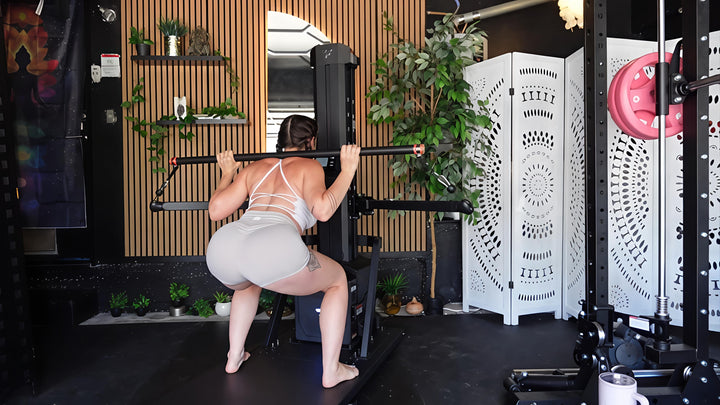
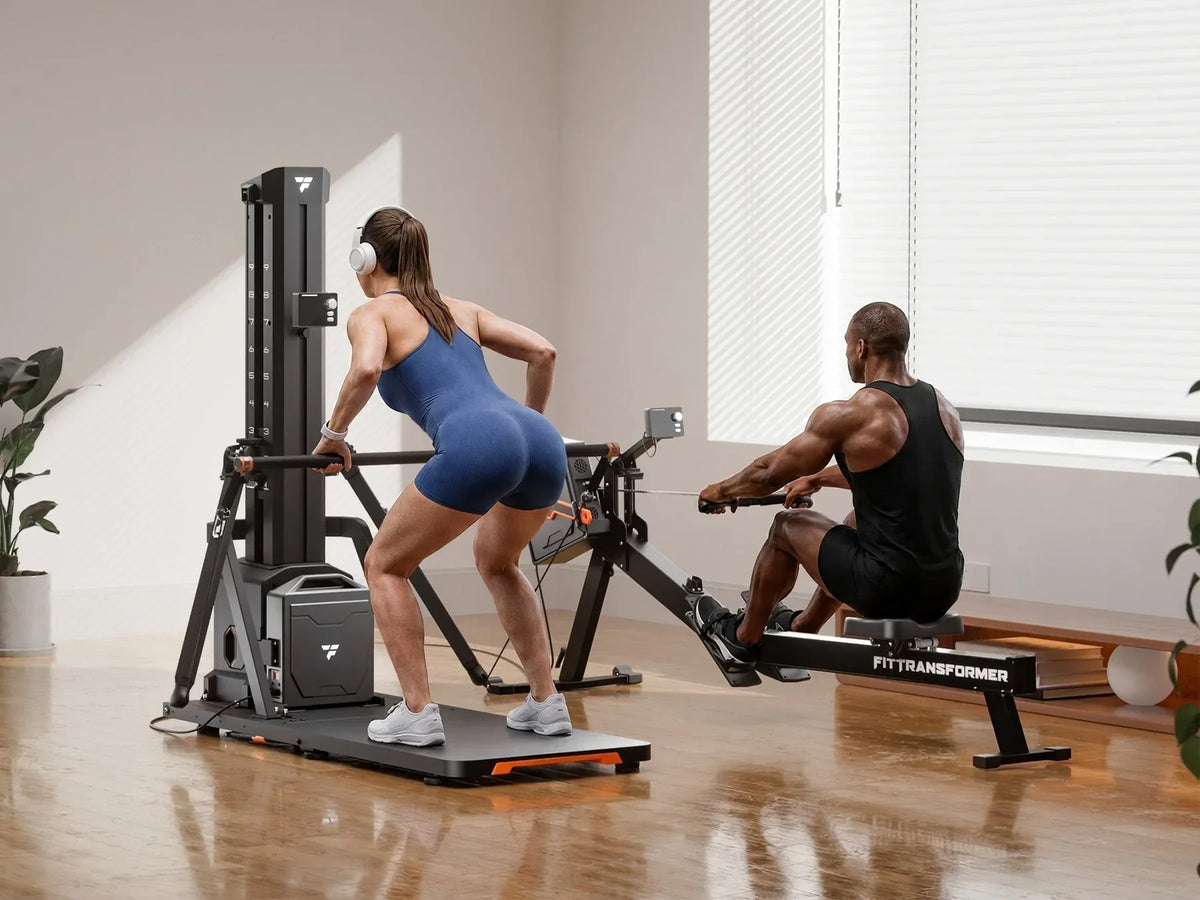
For users who want resistance training and ski-style cardio from one station, the Home Gym Machine provides digitally controlled resistance up to 264 lbs and supports 200+ listed movements alongside its ski mode. It requires electrical power, active workout space, and a much larger investment than bands or dumbbells.

How to Structure Cardio and Strength Across the Week
You do not need a five- or six-day training schedule simply because your goal includes weight loss.
The CDC’s general adult activity benchmark is at least 150 minutes of moderate aerobic activity per week, or an equivalent amount of vigorous activity, plus muscle-strengthening activity on two or more days. Those are general health recommendations, not a personalized fat-loss prescription.
A flexible home-training week could look like this:
|
Session |
Example Focus |
How to Adjust It |
|
Strength A |
Full-body resistance training |
Start with manageable exercises and progress gradually |
|
Aerobic 1 |
Walking, cycling, rowing, or ski erg |
Choose a sustainable pace and duration |
|
Strength B |
Full-body resistance training |
Repeat core movement patterns with appropriate resistance |
|
Aerobic 2 |
Steady cardio or intervals |
Match intensity to current fitness and recovery |
|
Optional activity |
Walking or another preferred cardio block |
Add only when it fits recovery and schedule |
You can also combine cardio and strength on the same day. The best order depends on the goal of the session, and Cardio Before or After Weights covers that question in detail.
Someone beginning with fewer sessions does not need to rush toward a five-day plan. The better weekly structure is one you can repeat. For more detailed scheduling options, see How Many Days a Week Should You Train.
Can Home Gym Equipment Target Belly Fat?
No machine can reliably direct where body fat is lost.
Training your abdominal muscles can make those muscles stronger, but that is not the same as selectively removing the fat stored over them. In one controlled study, six weeks of abdominal exercises improved abdominal muscular endurance without producing significant reductions in the measured abdominal-fat outcomes. A systematic review and network meta-analysis in people with overweight or obesity found beneficial changes in visceral adipose tissue with several exercise categories, including aerobic exercise, resistance training, combined training, and HIIT. Those findings support exercise as part of an overall plan; they do not show that a rower, treadmill, ski erg, or abdominal machine can choose where your body loses fat.
Regional changes in body fat also vary between individuals, so there is no universal rule that belly fat must always disappear last.

Why Equipment Cannot Replace Energy Balance
Home workout equipment affects the activity side of the equation. It cannot automatically compensate for the amount of energy coming from food and drinks.
The CDC notes that physical activity increases the energy the body uses, while weight loss often also involves adjusting calorie intake. The exact amount of physical activity required varies substantially between individuals. CDC guidance on physical activity and weight therefore treats physical activity and eating patterns as connected parts of weight management rather than presenting exercise equipment as a standalone solution.
That does not mean you need to calculate a rigid calorie target from this article. It means a workout machine should be judged by whether it helps you train consistently—not by whether its display makes it appear possible to “erase” a particular meal.
Sleep and recovery can also influence how consistently you train and manage daily habits, but they do not need to become a complicated hormone-management strategy.
How to Know Whether Your Home Setup Is Working
The number on a machine’s calorie display is not the only—or necessarily the best—way to measure progress.
Depending on your goals, useful trends can include:
- how many planned sessions you actually complete;
- aerobic duration, pace, resistance, or watts;
- resistance-training load and repetitions;
- whether the same workout feels more manageable;
- body-weight trends, when body weight is a relevant goal;
- waist measurements, when appropriate;
- how often the equipment is actually being used rather than stored.
Consumer-device estimates of energy expenditure can contain meaningful error. A living umbrella review found substantial variation in energy-expenditure accuracy across devices and studies. That research was not a validation of home gym consoles, but it is a useful reason not to assume an unvalidated calorie display is exact.
Use a machine’s calorie estimate as rough feedback, not as an exact amount that must be replaced with food.
What Should You Buy First?
Start with the training problem you actually need to solve.
When Budget Is Limited
Start simple. Walking plus bodyweight training, resistance bands, or adjustable dumbbells can cover a large amount of useful cardio and resistance work without a major equipment purchase.
When You Mainly Need a Cardio Option
Choose the activity you are most likely to repeat.
A treadmill makes sense for someone who enjoys walking or running. A bike suits people who prefer seated cycling. A rower works for those willing to learn rowing technique. A ski erg serves a different upright pulling pattern.
Do not choose only from a predicted calorie number.
When Strength Is the Priority
Choose equipment that gives you room to increase the challenge over time.
Bands, adjustable dumbbells, a barbell setup, or cables can all work when they match your available space, current strength, and preferred exercises.
When You Want Cardio and Strength in Limited Space
Compare the cost and footprint of two separate stations with an integrated or modular system. Check both stored dimensions and the space needed while actually exercising.
The broader Build a Home Gym guide can help with that setup decision.
Before buying any machine, ask:
- Will I realistically use this movement every week?
- Does it fit the room while I am actually training?
- Can the workload progress as my fitness improves?
- Is the noise appropriate for my home?
- Does it need power?
- How much setup or maintenance is involved?
- Does it solve a real training gap, or does it duplicate equipment I already own?
How to Choose the Right Weight-Loss Setup for Your Home
The best home gym equipment for weight loss is the equipment that fits a repeatable training plan—not necessarily the machine with the most impressive calorie claim.
Aerobic exercise can increase weekly energy expenditure and support reductions in body fat. Resistance training helps maintain or build strength and fat-free mass. Neither requires a commercial gym, and neither requires an expensive machine.
Start with the activity and resistance tools you can use consistently. Add equipment only when it solves a practical problem such as indoor cardio access, insufficient resistance, storage limitations, or the desire to combine multiple training modes in one space.
Consistency, progression, and an overall energy balance that supports your goal matter more than finding a supposedly perfect fat-burning machine.
FAQs
What Home Gym Equipment Is Best for Weight Loss?

No. There is no single best machine for everyone. A useful setup gives you a form of aerobic activity you will perform consistently and a way to progressively train the major muscle groups.
That may mean walking plus dumbbells for one person and a rower plus resistance equipment for another. Space, budget, exercise preference, and progression matter more than a generic calorie-burn ranking.
Is Cardio or Strength Training Better for Weight Loss?
They contribute differently. Aerobic training generally increases exercise-related energy expenditure more directly and has strong evidence for reducing body weight and fat mass, while resistance training helps maintain strength and fat-free mass.
A program can include both without treating one as the universally superior option.
Is a Rowing Machine Good for Weight Loss?
A rowing machine can be useful because it provides an indoor aerobic activity that can be performed at different workloads and durations.
It is not inherently a weight-loss machine, however. Results still depend on how regularly you train, how much work you perform, your overall activity, and energy intake.
Is a Treadmill or Rowing Machine Better for Weight Loss?
Neither is automatically better. A treadmill supports walking and running, while rowing uses a coordinated stroke involving the legs, trunk, back, and arms.
Choose based on which movement you prefer, which machine fits your space, and which one you can use consistently. A calorie estimate alone is not enough to determine the better choice.
Can Home Gym Equipment Help You Lose Belly Fat?
Exercise can contribute to reductions in total and visceral fat, but a machine cannot reliably direct fat loss to the abdomen.
Abdominal exercises can strengthen the abdominal muscles, while aerobic and resistance training can contribute to broader body-composition changes. Where fat changes first or last varies between individuals.
How Many Days a Week Should You Exercise for Weight Loss?
There is no single number of workout days that guarantees weight loss. General U.S. physical-activity guidance recommends at least 150 minutes of moderate aerobic activity per week plus muscle-strengthening activity on at least two days, but those guidelines are health benchmarks rather than an individualized weight-loss prescription.
Choose a weekly schedule you can sustain and adjust the amount of activity as your fitness, recovery, and goals change.