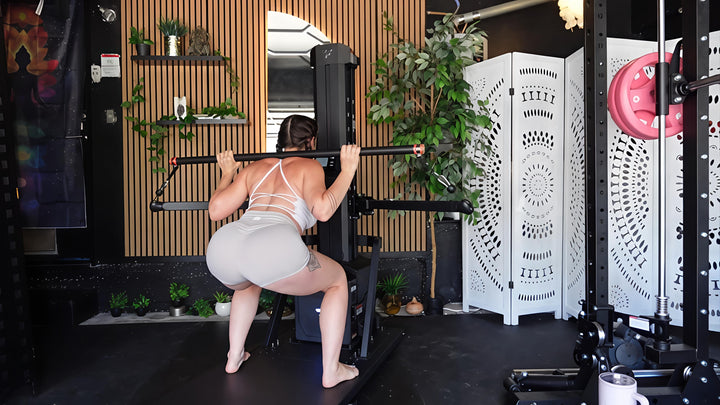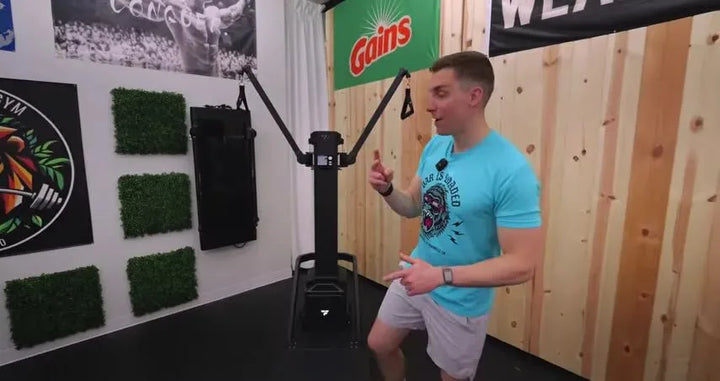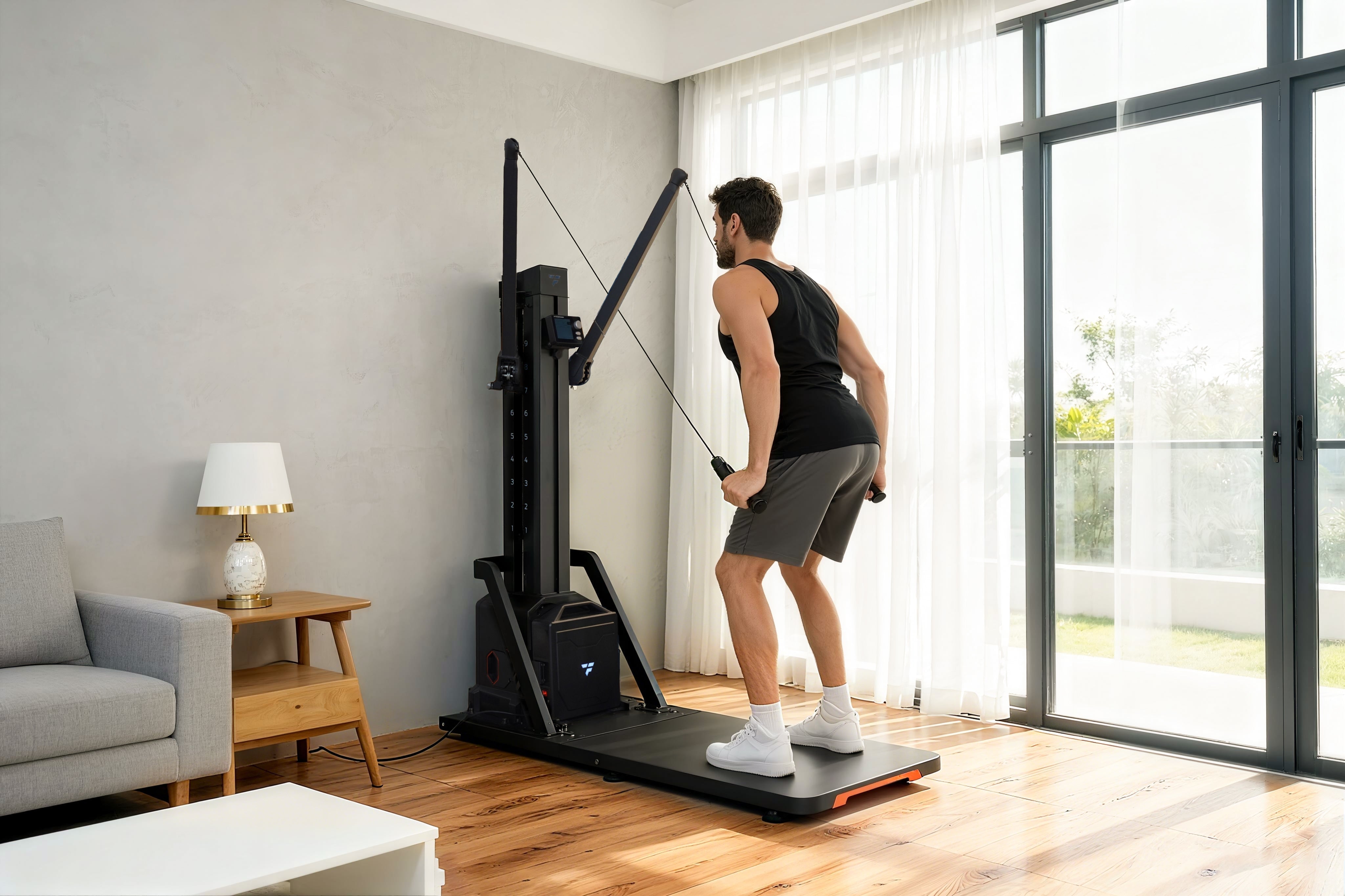
Three years ago, the ski erg was exclusively for professional athletes and CrossFit competitors. In 2026, it appears at HYROX events, home gym setups, and regular training routines. Most people still ask: What is this machine, and do I need it? Here's everything you need: what a ski erg is, the exact muscles worked, how it differs from a rowing machine, and your best home gym options.
|
Feature |
Details |
|
Primary Function |
Upper body cardiovascular conditioning |
|
Key Muscles Worked |
Lats, core, triceps, shoulders, rhomboids |
|
Cardio Type |
High-intensity interval training (HIIT) |
|
Space Required |
Compact footprint (plus standing room) |
|
Best For |
Functional fitness, HYROX prep, balancing leg-heavy routines |
What Is a Ski Erg
A ski erg is a cardio machine simulating the upper-body pulling motion of Nordic skiing. You stand upright, grab two handles connected to resistance cables, and pull downward using your core, back, and arms. Your legs stay planted and do not drive the movement.
When you pull the cables, an internal flywheel spins. Air-resistance models increase resistance as you pull faster, while magnetic systems provide fixed tension levels. You have the option to pull both handles simultaneously for maximum power output or alternate your arms for steady endurance training.
Do not confuse it with a traditional elliptical ski machine. An elliptical requires you to move your arms and legs at the same time. The ski erg isolates the upper body entirely. Your legs provide a stable base, but they do not push or propel you forward. This distinction matters greatly. The ski erg trains an intense upper-body pulling pattern that very few cardio machines can replicate. It offers a direct way to build lung capacity without placing additional impact on your knees or ankles.

What Does a Ski Erg Work Out
A ski erg works your core, lats, rhomboids, shoulders, and triceps in a specific sequence. It functions as a highly effective upper body endurance tool.
Here is the exact sequence of muscle activation:
- Core: Every downward pull starts with a sharp abdominal crunch. Your rectus abdominis and obliques contract first. They generate the initial downward momentum. This makes the machine an excellent tool for high-intensity core conditioning while doing cardio.
- Lats and Rhomboids: Your latissimus dorsi take over to perform the heavy pulling. Your rhomboids and mid-traps keep your shoulder blades stable against the resistance. Regular training builds a wider and thicker back.
- Shoulders and Triceps: Your anterior deltoids assist the early phase of the pull. Your triceps activate heavily at the bottom of the movement as your arms extend fully behind your hips.
- Hamstrings and Glutes: You must maintain a slight hip hinge during the movement. Your glutes and hamstrings hold that hinge tight, providing total lower body stability.
The cardiovascular demand is incredibly high. Because the upper body has less overall muscle mass compared to the legs, your heart must pump blood much faster to deliver oxygen to those smaller muscles. This results in a rapid and intense heart rate spike. You will likely reach your maximum heart rate faster on this machine than on a treadmill. That is why many beginners use it for high-intensity interval training.
Ski Erg vs Rowing Machine: Which One Do You Actually Need
A rowing machine offers full-body endurance, while a ski erg provides highly concentrated upper-body intensity.
Here is a breakdown of the differences across three main categories:
Muscle Activation Focus
- Rowing Machine: Full body engagement. The effort is roughly 60% legs, 30% back and core, and 10% arms.
- Ski Erg: Upper body dominant. The effort is roughly 80% upper body and core, with 20% leg stability.
If you squat heavy or run often, the ski erg gives your legs a break while severely taxing your lungs. If you want a full-body burn, the rower works best.
Cardiovascular Challenge
- Rowing Machine: The heart rate climbs steadily. It is perfect for steady-state cardio sessions lasting 20 to 60 minutes.
- Ski Erg: The heart rate spikes instantly. It is ideal for high-intensity interval training. Two solid minutes of effort will push your heart rate to its absolute limit.
Space and Layout
- Rowing Machine: Requires a seated position and about 2.5 meters of floor length
- Ski Erg: Requires a standing position and features a compact footprint (though you need enough room to stand and pull). You only need vertical ceiling clearance.
These two machines complement each other perfectly. Having both provides the ultimate conditioning setup.

Ski Erg Workouts for Beginners: Where to Start
Start your training by focusing on pacing and core activation instead of pure speed.
You must establish two foundational habits:
- Pace over speed: Progress comes from maintaining clean form at a specific rhythm. The display shows your 500-meter pace. Your goal is holding a steady number, not pulling frantically. Set the damper setting low (around 3 or 4 )to master the speed of the flywheel.
- Core first: The movement starts with a tight core contraction. Your arms follow. Pulling with your arms first will fatigue your back within ten minutes
Follow this three-stage beginner plan:
- Stage 1 (Weeks 1 to 2): Build the movement pattern. Perform 10 minutes of low-intensity pulling. Focus purely on rhythm and core timing. Keep your heart rate around 60 to 70% of your maximum.
- Stage 2 (Weeks 3 to 4): Introduce intervals. Pull with maximum effort for 30 seconds, followed by 90 seconds of light recovery. Repeat this for 8 rounds. Try to keep your fast pace consistent across all intervals.
-
Stage 3 (Week 5 onward): Test your baseline. Complete a 1000-meter time trial. This is the1000-meter ski is a mandatory event in HYROX events. A
solid beginner target for a 1000-meter ski is generally around 4:30 to 5:00, depending on experience and fitness level.
Is a Ski Erg Worth It for a Home Gym
Yes, a ski erg is completely worth it for athletes needing intense upper body cardio in a small space.
It is perfect for three specific groups:
- Functional fitness competitors: The 1000-meter ski is a mandatory event in HYROX. You must train it specifically.
- Athletes with lagging upper body endurance: If your routine heavily features squats, cycling, or running, this machine directly addresses your upper body weaknesses.
- Space-conscious home gym owners: The standing footprint is under one square meter. Very few cardio machines offer this much intensity in such a tight area.
It may not be the best standalone choice if your primary goal is total body fat loss. A rowing machine might offer better overall utility. Also, if you lack a basic cardiovascular foundation, the intense heart rate spike might prove too difficult early on. Build basic endurance first, especially if you are still figuring out balancing leg-heavy routines.
Purchasing a dedicated, standalone machine often costs nearly a thousand dollars and only serves one function. The FitTransformer Titan includes the ski erg as one of its core training modes. For users looking for strength equipment, this is the most practical way to acquire ski erg capabilities with minimal cost and zero extra floor space.

Conclusion: Why a Ski Erg Makes Sense for Home Gyms
The ski erg provides the most efficient upper-body cardio workout available for your home gym. It targets your back, core, and arms while requiring minimal floor space. If you already have a solid leg training routine, this machine perfectly balances your fitness level. You do not need to buy a separate, single-use machine. The FitTransformer Titan integrates a complete ski erg system directly into its modular frame. Visit FitTransformer today to upgrade your home gym with the Titan.

FAQ
Q1: Is a ski erg good for weight loss?
Yes, it is highly effective. The intense physical demand results in massive calorie expenditure. Ten minutes of maximum effort burns calories at a rate comparable to twenty minutes of moderate jogging. The high-intensity nature also creates a strong afterburn effect. Your body continues burning calories for hours after the workout ends. It is highly demanding, so complete beginners should build basic endurance first.
Q2: Can you use a ski erg if you have shoulder injuries?
That depends entirely on the injury type. Fully healed rotator cuff issues often respond well to the downward pulling motion. The mechanics place less stress on the shoulder joint compared to overhead pressing. Acute injuries, active impingement syndrome, or recent dislocations prohibit its use. Always consult a physical therapist prior to starting, because physical therapy is usually one of the first treatments suggested.
Q3: How does ski erg compare to an assault bike for cardio?
Both machines deliver extreme cardiovascular stress, but they use different muscle groups. An assault bike demands full-body participation through pushing, pulling, and pedaling. A ski erg isolates the upper body while the lower body remains static. Choose the ski erg for targeted upper-body conditioning. Choose the assault bike for total-body exhaustion.
Q4: Does ski erg improve posture?
Yes, the results are highly noticeable. The pulling motion strengthens the lats, rhomboids, and mid-traps. These are the exact muscle groups that weaken from sitting at a desk all day. Regular training pulls your shoulder blades back and reverses rounded shoulders. The standing position also forces your core to maintain a rigid, upright posture throughout the day.