Many people tell you that exercise is something demanding a lot of effort, and time. Some plans advise 1 hour strength plus 30 min cardio for a workout day to be the most effective. But if you are super busy with your daily stuff, how can that timing be possible? Actually, if you plan the session well and put in the same dedicated effort, a 30-minute full-body workout can make you healthier and fitter.

The key: proper structure, optimal intensity, and smooth equipment flow.
| Quick view | What matters most |
| Is 30 minutes enough to workout | Yes, when the session is focused and hard enough |
| Best setup | Warm up fast, train the biggest moves first, keep transitions short |
| Main risk | Time lost to rest, switching, and low effort |
| Best fit for home training | A setup that lets you move from one mode to another fast |
Why 30 Minutes Can Be Enough
Training Adapts to Stimulus, Not Time
Research on muscle growth shows that solid results often come from a manageable number of hard sets per muscle group, with weekly volume spread across the week rather than crammed into one long session.
That means a short workout can still be productive if the sets are challenging and the exercise choice is smart.
Short & Hard Sessions Can Be Effective, Too
Short, hard sessions can also create a useful afterburn effect. High effort resistance work and circuit style training can raise oxygen use after the workout ends, which supports extra calorie burn during recovery. The main driver is intensity and effort, not padding the session with extra minutes.
Shorter Sessions Ensure Better Training Energy
There is also a quality issue. Big compound lifts demand a lot from the nervous system, and once fatigue climbs, form and output often drop. In a 30 minute block, it often makes more sense to use your best energy on the most important lifts first, then finish with lower priority work.

How to Structure a 30 Minutes Full Body Workout
Basic Template:
| Time | Move | Focus |
| 3-5 minutes | Dynamic warm-up | Raise body temp, mobilize joints |
| 20-25 minutes | Main workout. | Strength, conditioning, or both |
| 3-5 minute | Cool-down | Lower heart rate, stretch |
A useful 30 minute workout plan structure starts with a short warm-up, then moves into the main work, then ends with a brief cool down.
Warm up with movement that raises body temperature and opens up the joints. Dynamic drills and light rehearsal sets are a better fit than long static holds before training, because static stretching right before explosive work can reduce force and power output. Keep this part brief and specific to the session.
For the main block, there are two strong options. One is a compound lift format with 2 to 3 major movements such as squat, hinge, push, and pull, using 3 to 4 sets per movement with controlled rest. The other is a circuit format with 4 to 5 exercises done for time, which works well if you want strength and conditioning together. In both cases, put the hardest work first while your energy is highest.
And finally, cool down with light movement and simple stretching to lower your heart rate and help your body recover.
How to Make 30 Minutes Count
To make a 30 minute workout count, start with the moves that matter most for your goal. If muscle and strength are the priority, open with the most demanding compound lifts. If conditioning is the priority, keep the pace steady and choose movements that use a lot of muscle at once.
A few practical rules help a lot:
- Keep warm-up work short and specific.
- Use enough load or effort that the last reps feel challenging.
- Keep rest periods strictly to 30–60 seconds to maintain intensity.
- Keep the workout moving from one task to the next.
- Track progress week to week so the same 30 minutes keeps getting harder.
The biggest mistake is spreading energy evenly across every exercise. A better approach is to protect the first half of the session for the work that drives the result, then use the rest of the time for support work, conditioning, or a clean finish. That is the difference between a routine that fills time and a routine that creates change.
30-Minutes Full Body Workout Plans by Fitness Level
A useful 30-minute workout should match your current level. And remember to keep rest periods to 30-45 seconds between sets.
Beginner
This version is designed to build confidence, improve movement quality, and reduce injury risk. Beginners should focus on simple patterns, controlled tempo, and stable positions before adding speed or load.
| Segment | Time | Exercises (Sets & Reps) | Rest |
| Warm-up | 4 min | March in place (1 min), arm circles/hip rotations (1 min), bodyweight squats (2 min) | None |
| Main block | 20 min | Chair squat (3 x 10-12), Incline push-up (3 x 8-10), Supported row (3 x 10-12), Dead bug (3 x 10 per side) | 45-60 sec between sets |
| Cool-down | 6 min | Easy walking (2 min), chest/hip stretches (hold 30 sec each) | None |
Intermediate
Ideal for people with some training experience who want a stronger full-body session. Compound movements come first while energy is highest.
| Segment | Time | Exercises (Sets & Reps) | Rest |
| Warm-up | 4 min | Dynamic mobility, light rehearsal sets (1-2 sets of 8 reps with light weight) | None |
| Main block | 22 min | Goblet squat (3 x 10), Romanian deadlift (3 x 10), Push-up (3 x 10-15), One-arm row (3 x 10 per side) | 45 sec between sets |
| Cool-down | 4 min | Deep breathing, hamstring/thoracic stretches (hold 30 sec each) | None |
Advanced
Advanced trainees can use this format to combine strength, power, and conditioning in one short session. The key is to keep the warm-up specific, place the hardest work first, and maintain high movement quality throughout.
| Segment | Time | Exercises (Sets & Reps) | Rest |
| Warm-up | 5 min | Mobility flow, 2 specific warm-up sets building up to working weight | None |
| Main block | 20 min | Heavy Squat or Hinge (4 x 5-8), Press (3 x 8-10), Pull (3 x 8-10), Power Finisher (2 mins max reps) | 60 sec for heavy lifts, 30 sec for accessories |
| Cool-down | 5 min | Low-intensity cardio, long exhales, static stretching (hold 45 sec each) | None |
Home Training With FitTransformer
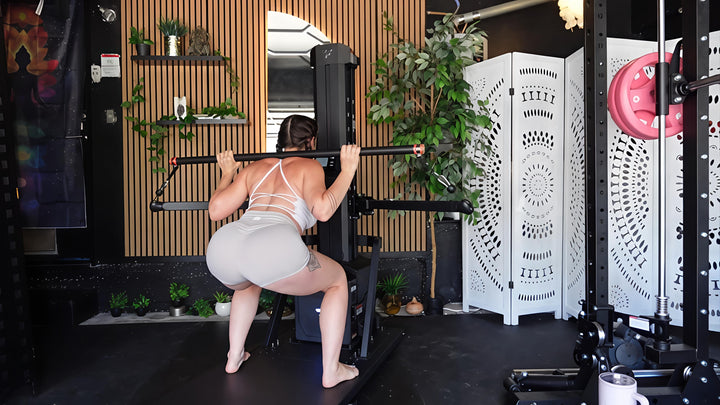
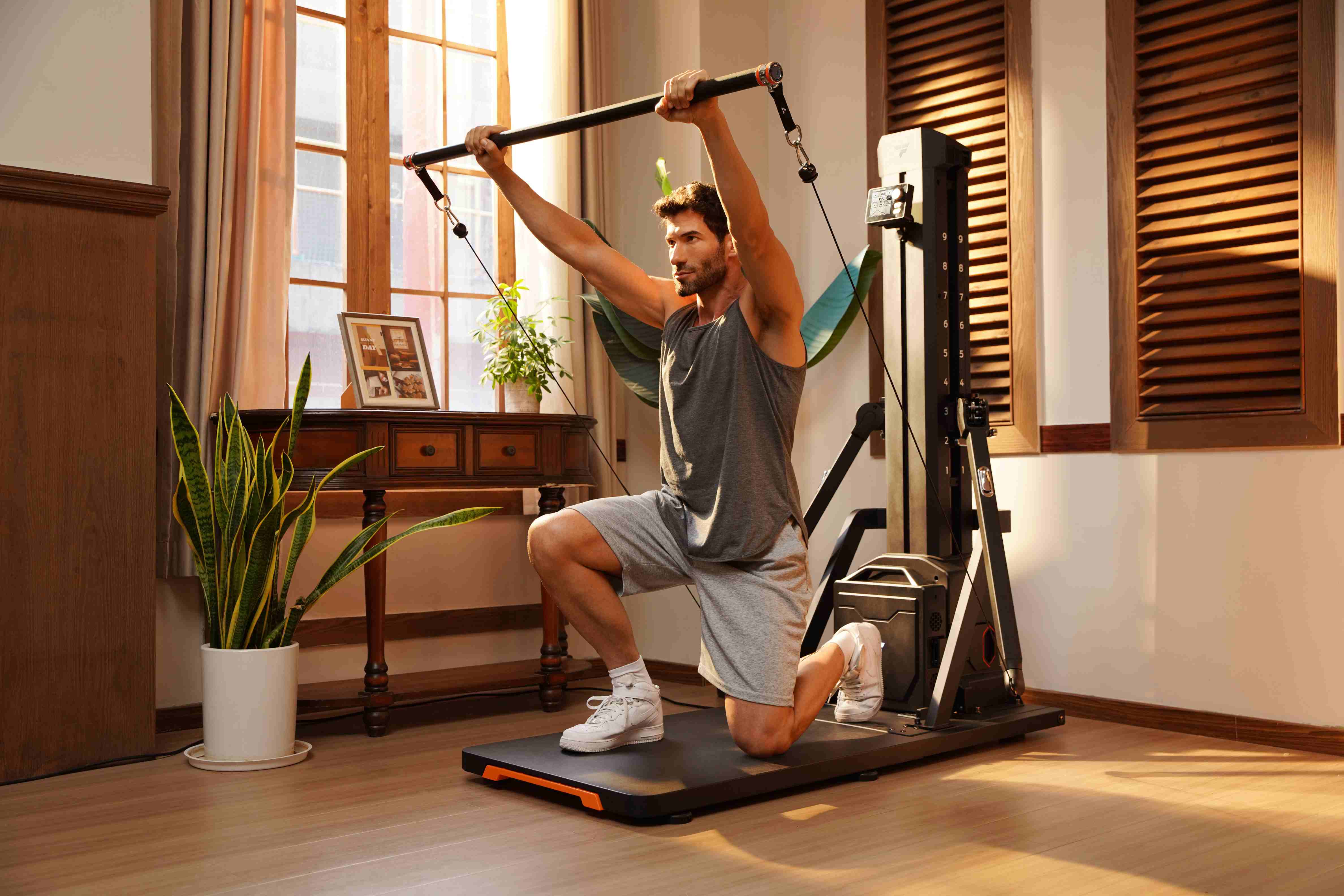
For users with a fitness base, or who is a pro, FitTransformer makes it possible to complete a highly effective 30-minute workout at home without going to the gym. That means less time spent commuting and more time spent training.
| Segment | Time | Exercises (Sets & Reps) | Rest |
| Warm-up | 4 min | Light rowing (2 min), bodyweight mobility (2 min) | None |
| Strength block | 10 min | Squat to press (3 x 10-12), Single-arm row (3 x 10-12 per side) | 30-45 sec between sets |
| Cardio block | 6 min | Ski mode intervals: 30 sec max effort / 30 sec recovery (6 rounds) | Included in intervals |
| Steady finish | 6 min | Moderate cardio effort (Rowing or Skiing at steady pace) | None |
| Cool-down | 4 min | Hip flexor, chest, and back stretches (hold 30 sec each) | None |
This setup works especially well for busy people who want a time-efficient, full-body session at home. With the right structure, a home workout can still be challenging, balanced, and highly effective.

The Hidden Cost of Switching
A short workout can lose a surprising amount of value when too much time goes into changing stations, moving gear, or waiting for equipment. Even small delays add up fast in a 30 minute full body workout at home, because every minute spent resetting is a minute not spent training.
That delay also affects quality. When heart rate drops and the nervous system cools off between efforts, the next set can feel less sharp and less powerful. For a short workout to remain effective, the goal is to keep momentum high and reduce friction wherever possible.
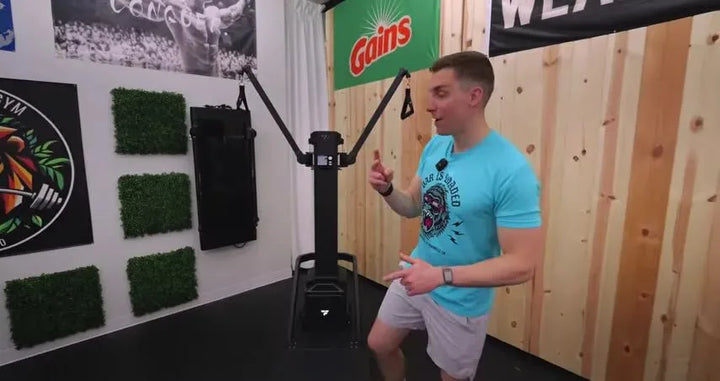
This is where home setup matters. FitTransformer is built for fast mode changes, so the session can stay focused on training instead of setup. Its modular system supports quick switching between strength, rowing, and ski modes, which makes it easier to keep a session tight and efficient. In a 30 minute window, that kind of flow protects both time and output.

FAQs
Q1: Is 30 minutes enough to build muscle?
Yes, if the work is hard enough and the weekly volume adds up. Research summaries point to effective weekly set ranges for muscle growth, and a 30 minute session can absolutely contribute to that total when the sets are close to failure and the plan is consistent. The shorter session works best when the exercises are chosen with care and the effort stays high.
Q2: How many days a week should you train for 30 minutes?
For strength focused work, three days a week is a strong starting point because the body needs recovery after hard full body sessions. For conditioning focused work, four to six shorter sessions can work if the intensity is managed well. A mix of both often works best for average fitness focused adults.
Q3: Can a 30 minute workout help with stress?
Yes. Exercise can help with stress relief, and shorter sessions are often easier to repeat consistently. A steady routine is usually more useful than a long session that happens only once in a while.
Q4: What should you eat before training?
For a 30 minute session, a full meal is not always needed right away. If you ate recently, you can often train as is. If you train on an empty stomach and feel low on energy, a small carb snack can help keep the session strong.
Final Take
A 30 minute workout works when the effort is high, the structure is clear, and the setup does not waste time. That is why a well planned full body workout 30 minutes long can produce real results at home. FitTransformer helps remove the friction from short sessions, so more of those 30 minutes go into actual training. See how FitTransformer can support a faster, smarter home workout setup for you.