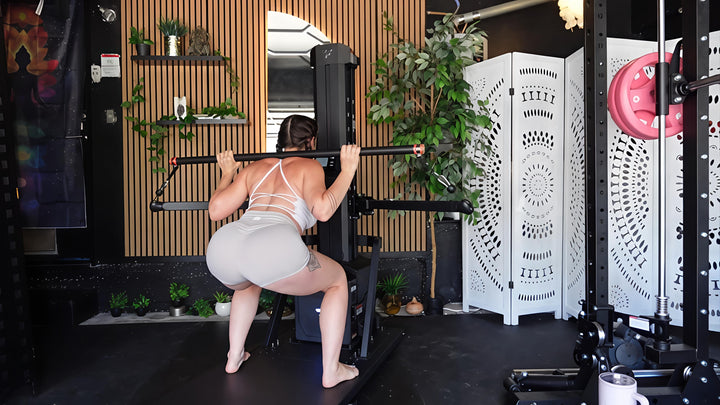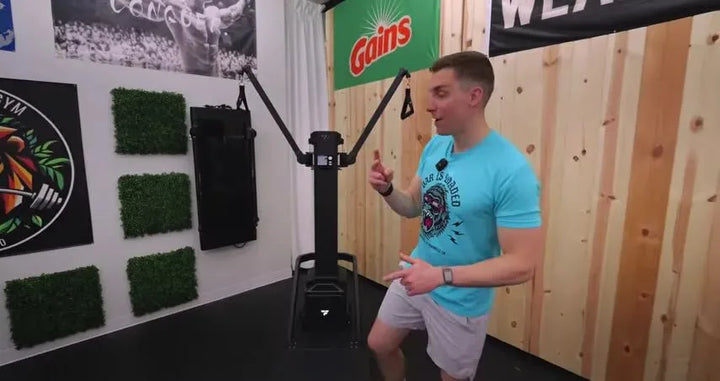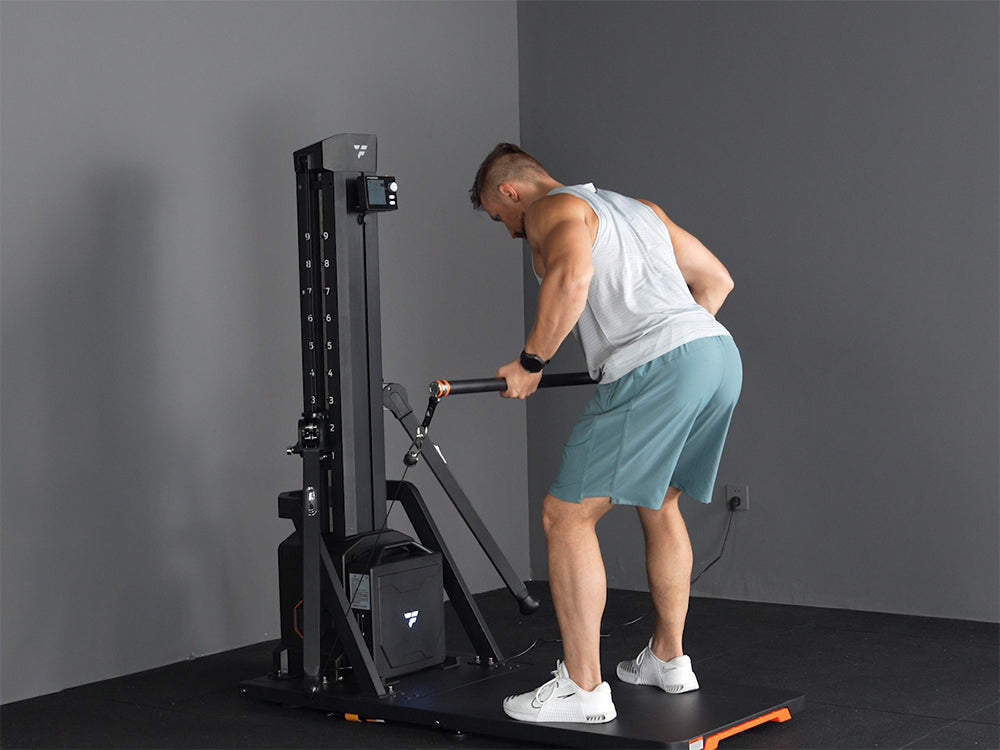
A good upper body workout trains more than chest and arms. It covers pulling muscles, shoulder stabilizers, and the connection between your core and upper body. Most home routines skip at least two of those areas. The framework below shows you what to train, what each equipment setup can handle, and how to structure your sessions for balanced strength.
Quick Reference: The Four Areas a Complete Upper Body Workout Covers
|
Area |
Key Muscles |
Common Problem |
|
Pushing Chain |
Chest, front delts, triceps |
Overtrained in most programs |
|
Pulling Chain |
Lats, rhomboids, traps, rear delts, biceps |
Hard to train at home without equipment |
|
Shoulder Stability |
Rotator cuff, serratus anterior |
Rarely trained on purpose |
|
Core-to-Upper-Body Link |
Obliques, serratus anterior |
Only activated through single-arm work |

Which Muscles Does an Upper Body Workout Need to Cover?
Upper body muscles fall into four functional areas. Here is what each one does and why it matters.
Pushing Chain
Chest, front delts, and triceps. These muscles push things away from your body.
Push-ups, dumbbell presses, overhead presses, and cable chest presses all target this chain. If you have been training upper body for any length of time, your pushing chain is probably the strongest link already.
Pulling Chain
Lats, rhomboids, mid and lower traps, rear delts, and biceps. These muscles pull things toward your body.
Rows, pull-ups, lat pulldowns, and cable rows train this chain. The pulling chain is the hardest area to train at home because you need something to pull against. Without a pull-up bar or cable system, there is almost no way to load these muscles properly.
Shoulder Stability
The rotator cuff (four small muscles deep inside the shoulder joint) and the serratus anterior (the muscle along your ribs beneath your armpit). These muscles stabilize your shoulder during every push and pull you do.
External rotation drills, Y/T/W exercises, and cable face pulls keep these muscles healthy. Leaving them out of your program increases the risk of shoulder pain and impingement over time.
Core-to-Upper-Body Connection
Your obliques and serratus anterior transfer force between your trunk and your arms. Single-arm exercises activate this connection automatically because your body has to resist rotation. Double-arm movements do not.
Single-arm cable presses, single-arm rows, and farmer's walks all build this link.
A balanced program keeps push and pull volume close to 1:1. Shoulder stability work should show up at least twice a week. Single-arm movements should make up about 30% of your upper body training.
In reality, most home programs run about 3:1 push-to-pull, include no shoulder stability work, and skip single-arm exercises completely. That pattern builds up over months and usually shows up as rounded shoulders, neck tension, or shoulder pain.
What Can You Actually Train With Your Home Setup?
Not every home setup covers all four areas.
|
Pushing |
Pulling |
Shoulder Stability |
Core Link |
|
|
Bodyweight only |
Good (push-up variations) |
Very poor (no pulling equipment) |
Limited (floor Y/T/W only, no load progression) |
Limited |
|
Dumbbells + pull-up bar |
Complete |
Mostly complete (pull-ups + dumbbell rows) |
Good (dumbbell external rotations) |
Moderate |
|
Adjustable dumbbells + pull-up bar |
Complete |
Good to complete |
Good |
Good |
|
Cable system (FitTransformer Titan) |
Complete, all angles |
Complete, all pulling angles covered |
Most thorough (face pulls, external rotations, Y/T/W all precisely loaded) |
Strong (every single-arm cable movement activates it) |
The biggest takeaway: pulling chain coverage is the main differentiator between setups. Bodyweight alone cannot train it. Dumbbells and a pull-up bar cover most of it. A cable system like the FitTransformer Titan covers horizontal, vertical, and diagonal pulling angles plus shoulder stability training with digitally controlled resistance up to 264 lbs, which is difficult to replicate with other home configurations.

Which Exercises Work for Each Equipment Setup?
Pick your exercises based on the equipment you have. Below is a breakdown by functional area so you can check your coverage quickly.
Pushing Exercises
If you have no equipment, push-up variations are your foundation. If you have dumbbells, add presses. A cable system opens up single-arm presses that also train core anti-rotation.
- Push-ups, standard / narrow / wide (no equipment): Chest, triceps, and front delts. Accessible at any level and effective without equipment.
- Dumbbell bench press (dumbbells + bench): Chest focused, with the option to adjust the bench angle for upper or lower chest emphasis.
- Dumbbell overhead press (dumbbells): Hits all three delt heads. A staple vertical push.
- Cable single-arm chest press (cable system): Chest plus core anti-rotation. Your trunk has to stabilize against the pull of the cable on each rep.
- Cable overhead press (cable system): Delts with constant tension through the full range of motion, unlike dumbbells where tension drops at the top.
Pulling Exercises
Pull-ups are the top vertical pull if you have a bar. Dumbbell rows cover horizontal pulling. A cable system fills in the remaining gaps: lat pulldowns for pull-up progression, straight-arm pulldowns for lat isolation, and single-arm rows for core activation.
- Pull-ups (pull-up bar): Lats and biceps. A highly effective compound pull that requires minimal equipment.
- Dumbbell single-arm row (dumbbells): Lats and rhomboids. Low learning curve, easy to load progressively.
- Cable seated row (cable system): Rhomboids and mid traps. Keeps constant tension on the back through the entire pull.
- Cable single-arm row (cable system): Lats plus core anti-rotation. Each side works independently, exposing and correcting strength imbalances.
- Cable lat pulldown (cable system): Lats. A strong prep exercise for building toward unassisted pull-ups.
- Cable straight-arm pulldown (cable system): Lat isolation without bicep compensation. Useful for learning to engage the lats in other pulling movements.
Shoulder Stability Exercises
Include these in every setup. They protect your shoulders and only take five to ten minutes at the end of a session. Use light resistance and slow, controlled reps. The goal is activation, not fatigue.
- Side-lying dumbbell external rotation (dumbbells): Rotator cuff. Simple to set up, easy to progress by small weight increments.
- Cable face pull (cable system): Rear delts, rotator cuff, and rhomboids. Trains external rotation and scapular retraction in one movement.
- Floor Y/T/W (no equipment): Lower traps and rhomboids. Can be done anywhere with zero setup.
- Cable external rotation (cable system): Rotator cuff with precise loading. Allows small, controlled resistance increases that dumbbells cannot match.
Core-to-Upper-Body Connection Exercises
These movements train your obliques and serratus anterior to transfer force between your trunk and arms. Any single-arm cable exercise already activates this connection as a secondary benefit, but the exercises below target it directly.
- Cable woodchop, diagonal (cable system): Obliques and serratus anterior. A rotational pattern that links upper and lower body through the core.
- Single-arm farmer's walk (dumbbell or cable): Obliques. Carrying load on one side forces your entire trunk to stabilize against lateral tilt.
One rule for every session: include at least as many pulling movements as pushing movements.

Your Weekly Upper Body Training Plan
Train upper body twice per week. Leave at least 48 hours between sessions. Fit them between lower body or cardio days.
A note on tempo: the numbers in the Tempo column describe how many seconds each phase of a rep takes. For example, 2-1-2 means 2 seconds lowering the weight, 1 second pause, 2 seconds lifting the weight.
Which plan should you follow? Have dumbbells and a pull-up bar? Use Plan A. Have a cable system? Skip to Plan B.
Plan A: Dumbbells + Pull-Up Bar
Day A1 (Push Focus, Pull Support)
|
Exercise |
Sets x Reps |
Tempo |
Area |
|
Dumbbell bench press |
4 x 8 |
2-1-2 |
Push |
|
Dumbbell single-arm row |
4 x 10 per side |
2-1-2 |
Pull |
|
Dumbbell overhead press |
3 x 10 |
2-1-2 |
Push |
|
Inverted row (under a table or low bar) |
3 x 12 |
2-1-2 |
Pull |
|
Side-lying dumbbell external rotation |
2 x 15 per side |
Slow, controlled |
Shoulder stability |
|
Single-arm farmer's walk |
2 x 30 seconds per side |
Steady pace |
Core-to-upper-body link |
Day A2 (Pull Focus, Push Support)
|
Exercise |
Sets x Reps |
Tempo |
Area |
|
Pull-ups (or assisted) |
4 x max reps |
Controlled lowering |
Pull |
|
Push-ups (hands on dumbbells for depth) |
4 x 10 |
2-1-2 |
Push |
|
Dumbbell bent-over row |
3 x 10 |
2-1-2 |
Pull |
|
Dumbbell lateral raise |
3 x 12 |
2-1-1 |
Push (delts) |
|
Floor Y/T/W |
2 x 10 each position |
Slow |
Shoulder stability |
|
Single-arm farmer's walk |
2 x 30 seconds per side |
Steady pace |
Core-to-upper-body link |
Plan B: Cable System (FitTransformer Titan)
Day B1 (Push Focus, Pull Support)
|
Exercise |
Sets x Reps |
Area |
|
Cable single-arm chest press |
4 x 10 per side |
Push + core anti-rotation |
|
Cable seated row |
4 x 10 |
Pull |
|
Cable overhead press |
3 x 10 |
Push |
|
Cable single-arm row |
3 x 10 per side |
Pull + core |
|
Cable external rotation |
2 x 15 per side |
Shoulder stability |
Day B2 (Pull Focus, Push Support)
|
Exercise |
Sets x Reps |
Area |
|
Cable lat pulldown |
4 x 10 |
Pull |
|
Cable single-arm chest press |
4 x 10 per side |
Push |
|
Cable straight-arm pulldown |
3 x 12 |
Pull (lat isolation) |
|
Cable face pull |
3 x 15 |
Shoulder stability + pull |
|
Cable woodchop (diagonal) |
3 x 10 per side |
Core-to-upper-body link |
How to Progress
Dumbbell plan: When you hit the top of the rep range for two sessions in a row, move up to the next weight or add a set.
Cable plan: Reassess every two weeks. If your form stays clean at the current resistance, increase by a small increment. The FitTransformer Titan uses digitally controlled resistance, so you can make precise jumps instead of waiting for the next fixed weight plate.
Get Fit With FitTransformer
Now you have the muscle map, the exercise options, and the weekly structure. The next step is to pick a plan and stay consistent. The FitTransformer Titan covers all four functional areas in one foldable machine: digitally controlled resistance up to 264 lbs, adjustable cable angles for over 200 exercises, and precise load progression built into every session. Check out the FitTransformer Titan and see how it fits into your home training setup.

FAQs
Q1: How many times a week should I train upper body?
Twice per week works well for most people. That frequency stimulates muscle growth twice and leaves enough recovery time between sessions. Advanced trainees can go three times per week if they reduce volume per session. Once per week is enough to maintain strength but typically produces slower growth.
Q2: Can I build a strong upper body with only push-ups?
No. Push-up variations build the pushing chain well, but they do nothing for the pulling chain. Over time, a push-up-only routine creates a push-pull imbalance that often leads to rounded shoulders, neck tension, and shoulder discomfort. At minimum, find a sturdy table edge, low bar, or playground equipment and do inverted rows to partially cover the pulling side.
Q3: What are the best upper body exercises for beginners?
No single exercise fits everyone equally, but if you can only pick two: dumbbell bench press for pushing (easier to add weight progressively than push-ups) and dumbbell single-arm row for pulling (no pull-up bar needed, low learning curve, strong back development). Start with those two, get comfortable with the movement patterns, and add more variations as your strength grows.
Q4: How long does it take to see upper body strength results?
Strength gains from neural adaptation (your muscles get better at firing together) typically show up in four to six weeks. Visible changes to muscle shape usually take eight to twelve weeks of consistent training with adequate protein (0.7 to 0.9 grams per pound of body weight daily). Track your numbers: pull-up count, rowing weight, and press weight tend to improve before you notice changes in the mirror.