Your Fitness Goals Will Change. Shouldn't Your Home Gym Be Ready?
Picture your home gym a year from today.
Maybe you're lifting heavier weights. Maybe you've started taking cardio more seriously. Or maybe your schedule has changed, and those hour-long workouts have turned into quick 20-minute sessions between work and family responsibilities.
The equipment you choose today might still work perfectly well. But will it still give you everything you need?
It's a question worth asking before investing in a home gym.
Most people choose fitness equipment based on what they want to accomplish right now. And that makes sense. But building a home gym isn't just about today's workout. It's about creating a space you'll actually want to use six months, a year, or even several years down the road.
So, what should you look for in a home gym that can keep up with you?
1. Your Fitness Goals Probably Won't Stay the Same
Think back to when you first started working out.
Maybe your goal was simply to become more active. You bought a pair of dumbbells, followed a few beginner workouts, and focused on building consistency.
A few months later, things started to change.
The weights that once felt challenging became easier. You started exploring different exercises. Maybe you wanted to build more muscle, improve your endurance, or follow a more structured strength training routine.
That's a natural part of fitness.
As you become more comfortable with exercise, your interests and abilities can evolve. What worked for your first few months may no longer offer the same challenge later on.
For example:
- Today: You're getting comfortable with basic strength exercises.
- Three months from now: You're increasing resistance and trying new movements.
- Six months from now: You're following a more consistent training program.
- A year from now: You might be combining strength, cardio, and conditioning into your weekly routine.
Of course, everyone's fitness journey is different. You might discover a new activity, change your priorities, or simply want more variety.
The important thing is that your home gym shouldn't limit those possibilities.
2. Make Sure Your Equipment Can Challenge You as You Progress
One of the first things to consider when building a long-term home gym is resistance.
If strength training is part of your routine, you'll likely want the ability to make exercises more challenging over time.
This is where progressive overload comes in.
Progressive overload means gradually increasing the demands of your workouts as your strength and fitness improve.
Depending on your training plan, that might involve adding resistance, increasing repetitions, changing exercise difficulty, or adjusting your training volume.
Let's say you start with a manageable resistance for squats or rows.
After several weeks of consistent training, you may be ready for something heavier. If your equipment can't accommodate that progression, you might find yourself shopping for an upgrade sooner than expected.
That's why adjustable resistance matters.
Instead of buying equipment that only supports your current strength level, look for a system with enough flexibility to accommodate both lighter workouts and more demanding sessions.
A Home Gym That Grows With Your Strength
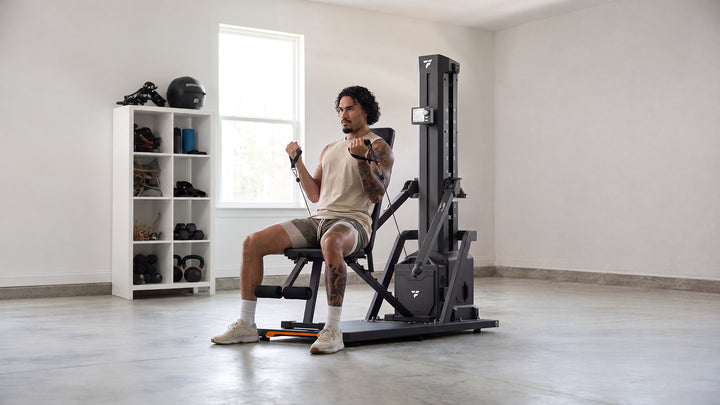
For example, the FitTransformer Titan uses a digital resistance system with up to 264 lbs of total resistance.
Its adjustable resistance allows you to make smaller changes as your training progresses, without needing to collect an increasingly large selection of weight plates or dumbbells.
That flexibility can be useful whether you're learning a new movement, working through a controlled strength session, or gradually increasing the challenge.
Your equipment doesn't have to make you stronger on its own. But it should give you the tools to keep progressing.
3. Think Beyond the Workouts You Enjoy Today
There's nothing wrong with having a favorite way to exercise.
Maybe you love lifting weights. Maybe you prefer a quick cardio session. Or perhaps you're still discovering which workouts you enjoy most.
But imagine you've spent a year building your strength, and now you want to add more conditioning to your routine.
Would your home gym support that change?
If your setup consists entirely of strength equipment, you might need to buy a separate cardio machine. If you only own a rowing machine, you may eventually want more options for resistance training.
This doesn't mean every home gym needs to include every possible type of exercise.
It means thinking about versatility before you buy.
A well-rounded home gym might support several training needs:
- Strength training: Building and maintaining muscle through resistance exercises.
- Functional training: Practicing movements that involve multiple muscle groups.
- Cardio: Improving aerobic fitness through activities such as rowing.
- Conditioning: Combining strength and endurance work for a different type of challenge.
- Workout variety: Switching exercises and training styles to keep your routine engaging.
You may not use every option immediately. But having room to explore different training styles can make your home gym more useful over time.
More Than One Way to Train
This is one of the advantages of a versatile home gym system.

FitTransformer Titan supports more than 200 exercise variations, including squats, presses, rows, cable exercises, and ski-style conditioning.
Rather than purchasing a separate machine for every strength movement, you can use the system's adjustable arms, attachments, and resistance settings for different workouts.
And if rowing becomes part of your fitness routine, FitTransformer Sail introduces another training experience through air, water, and magnetic rowing resistance modes.
The idea isn't that you need to do everything.
It's that your equipment should leave you with more choices when you're ready to try something new.
4. Your Home Gym Should Adapt Without Taking Over Your Home
Here's something people don't always think about when buying exercise equipment: your home might change, too.
Maybe you move to a smaller apartment. Maybe a spare bedroom becomes a home office. Or perhaps the space you've dedicated to exercise needs to accommodate something else.
Suddenly, that large collection of gym equipment doesn't seem quite as practical.
When you're planning a home gym for the long term, it's worth considering how much space the equipment will occupy, both while you're using it and when you're not.
Before purchasing anything, ask yourself:
- Will I have enough room to perform the exercises comfortably?
- Can the equipment be stored or folded when not in use?
- Will I need to add more machines as my workouts change?
- Could this setup still work if I reorganize the room?
A compact design is helpful, but versatility matters just as much.
For instance, FitTransformer Titan combines multiple strength training functions in a freestanding system, helping reduce the need for several separate machines.
Its foldable design also makes it easier to manage the equipment's footprint between workouts.
You still need adequate clearance to train safely, but a multifunctional setup can make better use of the space you have.
5. What Happens When You Want to Add Something New?
Let's imagine you've been using your home gym for a year.
You've made strength training part of your routine, and you're happy with your progress.
Now you want to try rowing.
With a traditional equipment setup, adding another training style often means purchasing another complete machine, along with its own motor, resistance mechanism, and other components.
But what if your home gym was designed to expand differently?
Meet the Modular Approach
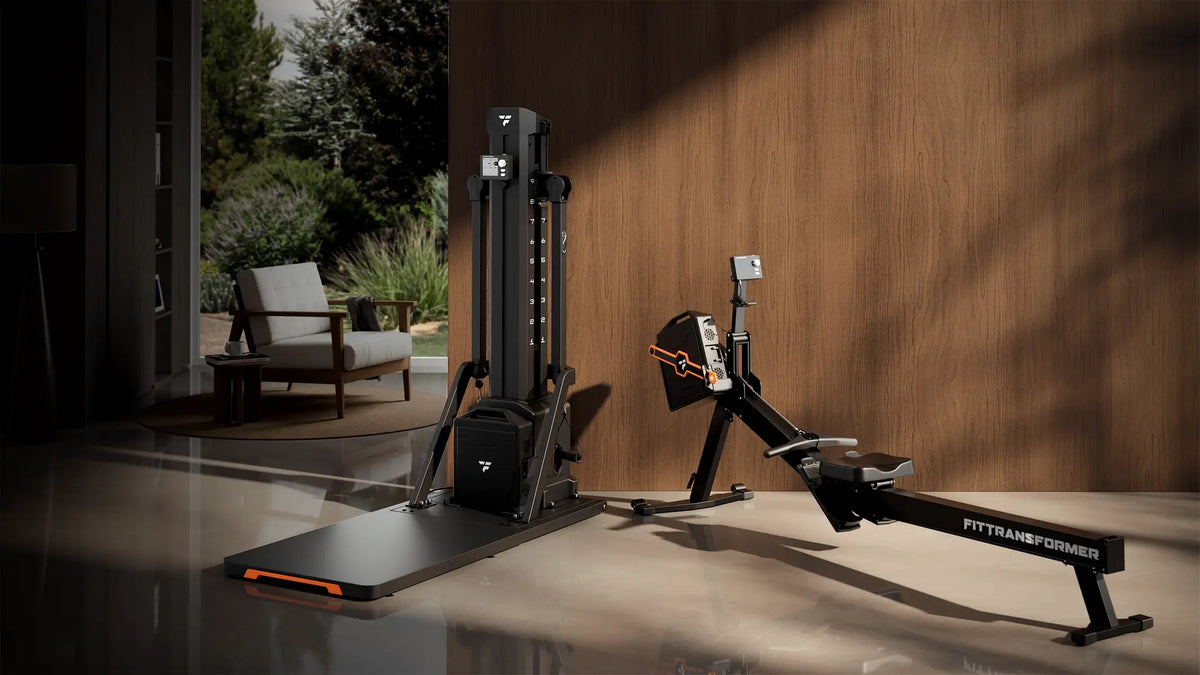
FitTransformer takes a different approach to home fitness through its interchangeable Core Module.

The Core Module acts as the power foundation for compatible training frames, allowing the same module to be used across different workout setups.
For example, you can begin with Titan for strength training and ski-style conditioning.
If you later decide to add rowing, you can introduce a compatible Sail Frame and transfer the Core Module between the two systems.
There's no need to purchase a completely separate Core Module just to use another compatible frame, provided you intend to use them one at a time.
One important distinction: A single Core Module must be moved between frames and cannot power Titan and Sail simultaneously.
This modular approach gives you the flexibility to expand your workout options without necessarily replacing the equipment you already own.
It's a way of building a home gym around your changing priorities rather than trying to predict every workout you'll ever want to do.
6. Consider What Your Home Gym Will Cost Over Time
The price of fitness equipment is only one part of the buying decision.
It's also worth thinking about what you'll spend after bringing it home.
Some connected fitness systems require ongoing subscriptions to access certain workout features. Other setups may need additional equipment as your training progresses.
Before buying, consider the longer-term costs.
Will you need to pay a monthly fee? Will you have to purchase additional weights? What happens if you want to introduce a new type of workout?
Example: A $30 Monthly Fitness Subscription
That doesn't automatically make subscription-based equipment a bad choice. Some people genuinely value the coaching, classes, and programming included.
But it's important to understand what you're committing to.
FitTransformer Titan doesn't require a monthly subscription to use its core training functions.
You can focus on your workouts without a recurring membership fee for the equipment itself.
And because the system supports multiple exercises and compatible training frames, you have more options for expanding your setup over time.
Accessories and additional frames may still require separate purchases, so it's worth choosing the configuration that fits both your current needs and your future plans.
7. Five Questions to Ask Before Buying a Home Gym
Before making a final decision, think about what your fitness routine might look like a year from now.
You don't need to predict the future. You just need to leave yourself some flexibility.
Here are five questions worth asking:
Look for adjustable resistance and enough exercise variety to support your progress.
Consider whether your setup can support strength, cardio, or conditioning as your interests evolve.
Think about storage, workout clearance, and whether the equipment can adapt to a different room layout.
Modular systems and compatible accessories can make it easier to introduce new training options.
Look beyond the initial price. Consider subscriptions, accessories, additional equipment, and maintenance.
The best home gym isn't necessarily the one with the most equipment or the longest feature list.
8. Build for the Person You're Becoming
A year from now, your fitness goals might look completely different.
You could be lifting heavier, rowing farther, trying new exercises, or simply finding a workout routine that fits your life better.
And that's the point.
Fitness isn't something you finish. It's something that develops alongside your goals, habits, and priorities.
Your home gym should be ready for that journey.
With adjustable digital resistance, versatile training options, and a modular system designed for compatible strength and rowing equipment, FitTransformer offers a way to build a home gym that can evolve with you.
You don't need to know exactly what your workouts will look like next year.
READY FOR WHAT'S NEXT.
One Core. More Possibilities.
A Home Gym That Grows With You.